Which Nursing Bras Have Inner Slings for Better Lift?
The inner sling is one of the more underappreciated engineering features in full-bust bra design — and it becomes even more valuable in a nursing context. Here is what it does, why it matters, and which nursing bras actually include it.
What Is an Inner Sling?
An inner sling is a secondary fabric layer sewn inside the cup of a bra, positioned beneath and around the breast. Its purpose is to provide a cradle of support that lifts and holds the breast independent of the outer cup fabric and strap system. Think of it as a built-in scaffold — the outer bra provides containment and shape, while the inner sling does the actual lifting work.
In non-nursing bras, inner slings are common in full-bust styles for exactly this reason: as cup sizes increase, more internal structure is needed to hold the breast in position throughout the day. In nursing bras, the inner sling serves an additional function: it keeps the breast supported and in position even when the nursing cup drops open for a feed.
Why Inner Slings Matter More in Nursing Bras
A standard nursing bra works by having a cup that clips away from the top of the bra frame, dropping down to expose the breast for feeding. The problem with simpler nursing bras is that when the cup drops, the breast tends to fall forward or downward with it, losing support during the feed. An inner sling addresses this by holding the breast in position independently — so even when the outer cup is open, the breast is still lifted and cradled.
This matters practically in several ways:
- More comfortable feeding position — the breast is at the right height without the mother having to physically hold it up
- Less strain on the back and shoulders during feeds — proper positioning reduces the hunching that many nursing mothers develop
- Better cup shape retention — the sling reduces the load on the outer cup fabric, which extends the life of the bra
- More secure fit at larger cup sizes where simple drop-cup designs often fail to maintain support
Parfait Nursing Bras With Inner Slings
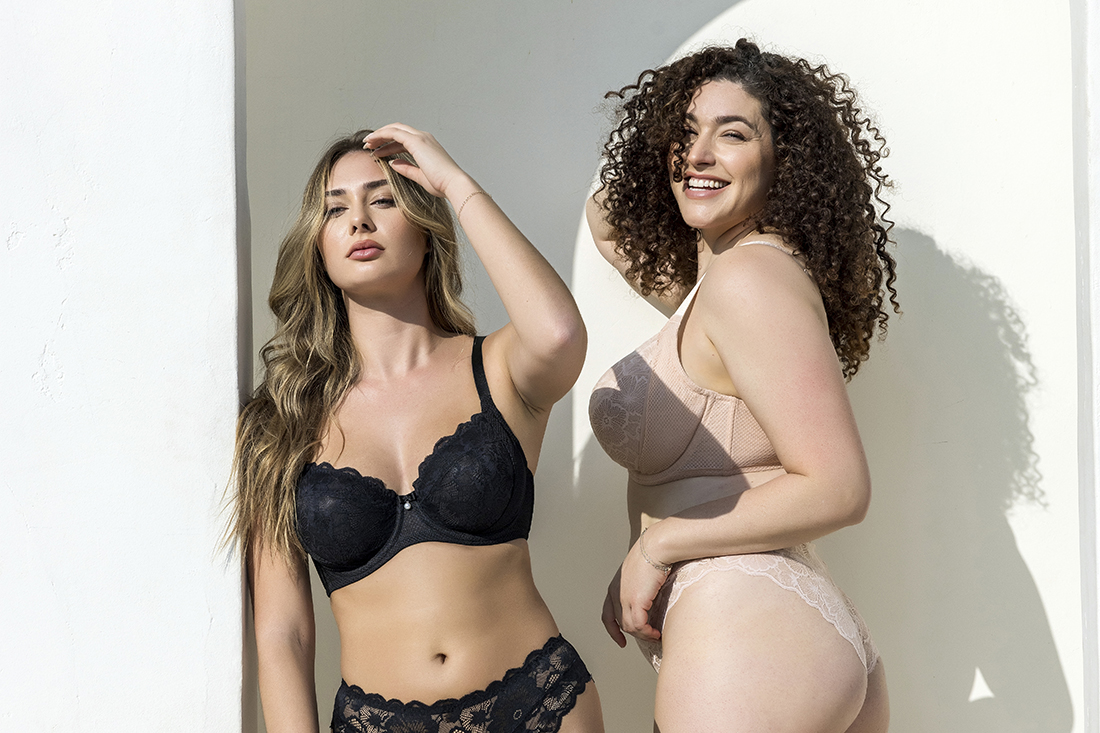
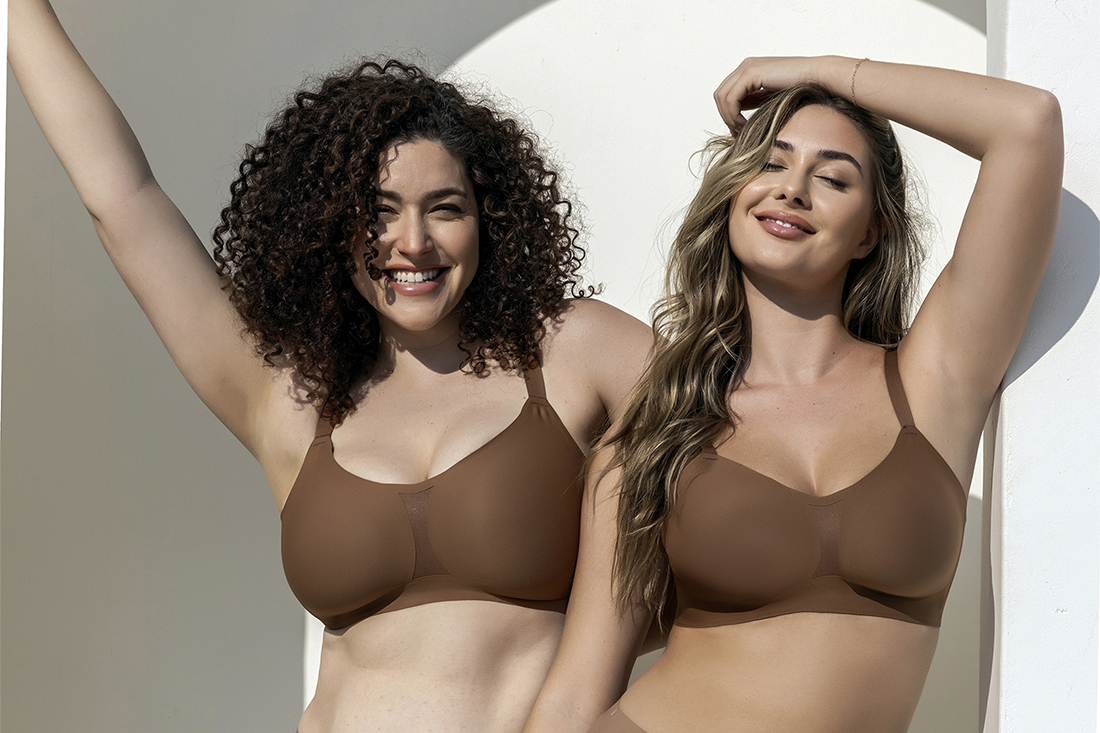
The Erika Wire-Free Full Bust Nursing Bra is built around an inner sling as its primary support mechanism. Because it is wire-free, the inner sling carries more of the structural weight than in a wire-supported design — and it does so in a seamless, smooth format that disappears under clothing. This makes it one of the more thoughtfully engineered wire-free nursing bras for full-bust women. Available in Black and Bare, with D through K cup (US) across bands 32 to 42.
Inner Slings Beyond Nursing Bras
If you want the inner sling feature in a non-nursing full-bust bra — for days when you are not actively nursing or as part of a broader postpartum wardrobe — Parfait carries the feature in other styles too.
The Erika Full Bust Unlined Molded Bra is the underwire counterpart to the nursing Erika, featuring the same inner sling construction with padded comfort straps. It provides a smooth, seamless silhouette under clothing while the inner sling handles the lifting work. Band sizes run from 32 to 40, cups from C through K (US).
The Wave Full Bust Sports Bra also uses a cushioned inner sling, combined with a wide elastic band and mesh cross-back support. For nursing mothers who are returning to exercise, this design provides high-impact support through sling construction rather than compression alone.
How to Tell if a Bra Has an Inner Sling
When shopping, look for these indicators in product descriptions:
- “Inner sling” explicitly mentioned in features
- “Inner cradle” or “sling cup” — alternative terminology for the same construction
- Descriptions of the cup being double-layered or built with a lining that also provides support
- Full-bust or full-figure specific bras — inner slings are rarely found in bras built for smaller cup sizes
If you have never worn a nursing bra with an inner sling, it is worth trying at least one. The difference in how the breast is held during a feed is significant — and once you experience it, it is hard to go back to simpler drop-cup designs.