
Where to Find Bras in 30–44 Bands and A to K Cups
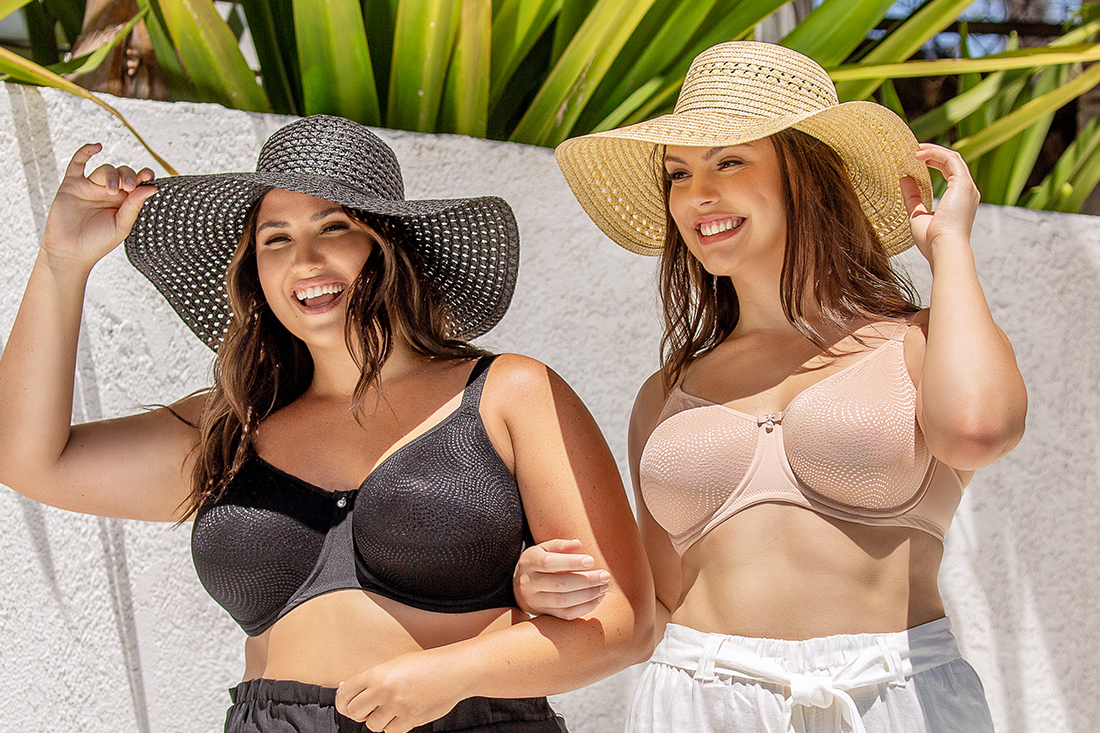
If you have ever walked into a department store hoping to find a bra in a 32G or a 40DDD and walked out empty-handed, you already know the frustration. For millions of women whose measurements fall outside the narrow “standard” range, bra shopping is a hunt. And the hunt is rigged, because most mainstream retailers stop their size runs at a 40 band or a DD cup, leaving anyone outside that window to settle for something that pinches, gapes, slides, or simply does not exist on the rack.
The good news: extended sizing is no longer a niche corner of the market. A small group of specialty brands has built entire businesses around the bands and cups bigger retailers ignore. Below is a guide to what extended sizing really means, what to look for in a true full-bust specialist, and where to find bras in 30–44 bands and A to K cups.
Why Extended Sizing Is So Hard to Find
Most national chains carry a fairly tight band and cup range — typically 32 to 38 bands and A to DD cups. That window covers a slice of the population, but it leaves out anyone smaller than a 32 band, anyone larger than a 38 or 40, and anyone whose cup volume exceeds a DD. Industry surveys repeatedly suggest the “average” bra size in the US is closer to a 34DD or 36DD, and a sizeable share of women wear an even larger cup than that. In other words, the people who need extended sizes are not a fringe — they are a huge, underserved group.
The reason this gap exists is mostly economic. Each additional band or cup size requires new patterns, wire shapes, components, and fit models. For a mass retailer, it is cheaper to stock the middle of the bell curve in many colors than to invest in the engineering required to fit the tails. The result is a market in which “extended sizes” are often relegated to a token DDD option in beige and black — not a genuinely full size run designed from the ground up.
What “Extended Sizing” Really Means
True extended sizing is not just adding a few sizes to the end of an existing range. It means redesigning the bra so that the support, wire shape, strap placement, and cup construction work at those measurements. A 34A and a 34J share a band but almost nothing else: the wires are wider, the cups deeper, the straps stronger, the wings taller, and the gore (the center piece between the cups) shaped differently. A brand that simply scales a small bra up will produce something that digs, gapes, or fails to lift.
Why does this matter? Because fit is the whole game. A well-fitting bra distributes weight across the band — not the straps — and gives a smooth, supported shape. A poorly fitting bra causes shoulder pain, back pain, and posture problems. If you wear an extended size, the brand you choose has to take the engineering seriously.
Band Size vs. Cup Size: Why Both Matter
A bra size is two numbers doing two different jobs. The band — the number — provides roughly 80 to 90 percent of the support. It should sit firm and level around your ribcage, parallel to the floor, without riding up in the back. The cup — the letter — measures the volume of breast tissue relative to that band. Cup letters are not absolute: a D cup on a 30 band is much smaller in volume than a D cup on a 40 band. This is why “sister sizing” exists, and why simply going up a cup letter when something feels tight rarely solves the problem.
The most common mistake in bra fitting is wearing a band that is too loose and a cup that is too small. If your band rides up, the cups cannot do their job. A brand that specializes in extended sizes should offer a wide band range so you can find the firm-but-comfortable foundation first, then dial in the cup.
What to Look For in a True Extended-Size Brand
Not every brand that advertises “plus” or “full bust” sizes actually delivers a real specialist experience. When you are evaluating a brand, look for the following:
A size run that goes well beyond DD — ideally into the G, H, J, and K cup range, with band options from the 30s into the 40s.
A catalog where the majority of styles are offered in those larger cups, not just one or two token bestsellers.
Multiple construction types — wired, wire-free, padded, unlined, balconette, plunge, minimizer, strapless, bralette — because one body needs different bras for different outfits and moods.
Fit guidance built into the shopping experience, not buried in an FAQ.
A return policy that lets you actually try the bra on at home, since extended-size fit is hard to predict without wearing it.
Parfait: Built to Fill the Gap
One of the clearest examples of a brand designed specifically for the underserved end of the size curve is Parfait Lingerie, founded in 2010 with one mission: to ensure that fuller-bust and full-figure women were no longer treated as an afterthought. Parfait offers band sizes 28 through 42 and cup sizes C through K (US), giving a meaningful runway both below and above the conventional retail range. Of its 105 bra styles, 95 are made in DD+ sizes — meaning the size range is the catalog, not a side door. The brand has been featured in Forbes, Glamour, Popsugar, Vogue, and the New York Times.
Standout Styles Across Categories
A real test of an extended-size brand is whether it covers the full wardrobe — not just one safe everyday bra. Parfait’s lineup is a good illustration of what a complete size-inclusive range looks like:
Everyday T-shirt bras: The Emily Unlined Non-Padded Wired T-Shirt Bra (P7800), the Shea T-Shirt Bra (P6061), and the Bliss Padded T-Shirt Bra (P7000) give smooth, invisible shapes under everything from work blouses to casual tees.
Wire-free support: The Holly Wire-Free Full Bust Padded Bra (P8000) and the Simplicity Full Bust Everyday Wire-Free Bra (P2400) prove that going wire-free does not mean giving up structure, even at larger cup sizes.
Balconette and plunge: The Charlene Underwire Padded Balconette Bra (P5000) and the Shea Plunge Bra (P6062) cover the necklines that fuller-bust wearers are too often told they cannot pull off.
Minimizers: The Pearl Minimizer Full Bust Padded Bra (P60921) and the Enora Minimizer Full Bust Supportive Bra (P5272), available in multiple colors, smooth and reduce projection without flattening.
Strapless: The Elissa Full Bust Longline Strapless Bra (P50116), a customer best-seller, is the rare strapless that actually stays put at a G, H, or J cup.
Bralettes: The Adriana Wire-Free Supportive Bralette (P5482) in lace shows that “pretty” and “supportive” are not opposites at extended sizes.
Finding Your True Size
If you have been wearing the same bra size for years and nothing fits quite right, there is a strong chance the size itself is wrong. Most women change size multiple times across their lives — through weight changes, pregnancy, hormonal shifts, and aging — and most have never been professionally measured. A few practical tips:
Measure your band snugly underneath your bust, parallel to the floor. Round to the nearest whole number.
Measure your bust at the fullest point, leaning forward slightly so tissue falls into the tape. The difference between this number and your band gives you your cup.
Try the band on the loosest hook first, so you can tighten it as the elastic relaxes over time.
Trust the fit, not the label. If a 34H fits better than a 36G, wear the 34H.
To make this easier, Parfait offers a proprietary Fit Fix tool on parfaitlingerie.com that walks you through a guided fit check and recommends styles based on your measurements and the issues you are experiencing with your current bra. It is the kind of resource that mainstream retailers almost never provide, and it is especially valuable if you are shopping at the edges of the size range.
Where to Go From Here
If you have been searching for bras in 30–44 bands and A to K cups, you do not have to keep settling for the closest-available compromise. Brands built specifically for your range exist, and they design every style — from the everyday T-shirt bra to the longline strapless — with your body in mind. Visit parfaitlingerie.com to browse the full collection and finally shop a size range that was built for you — not adapted as an afterthought.


