The Real Difference Between UK and US Bra Sizing Explained
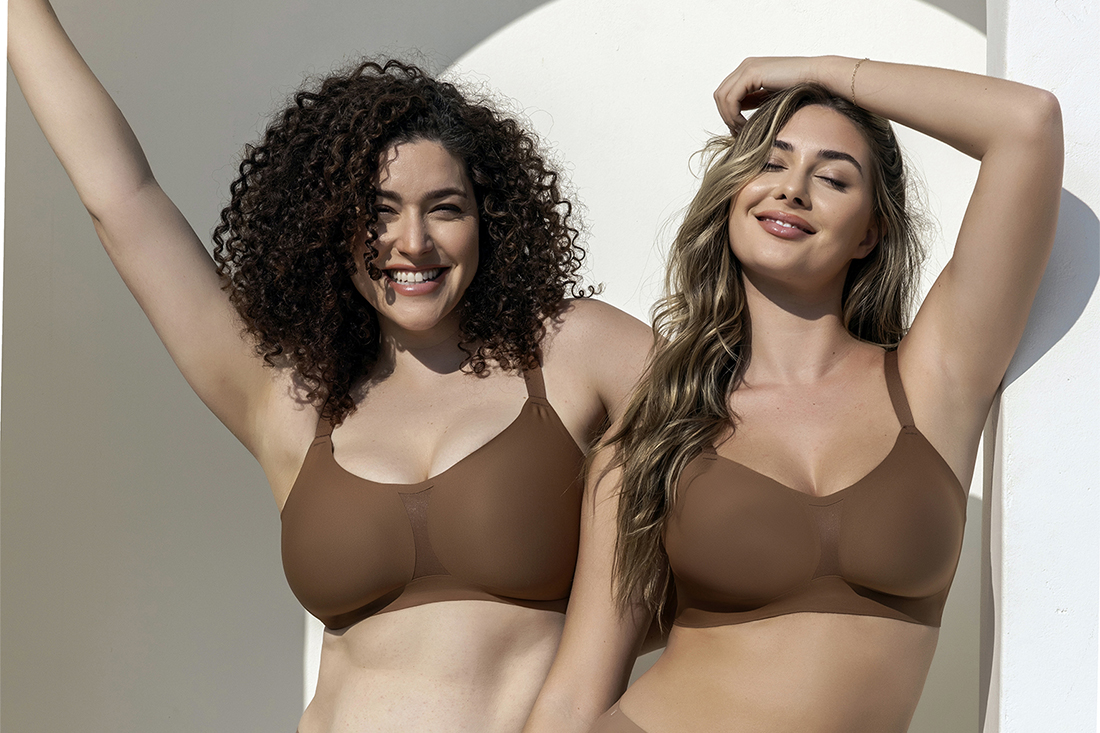
If you’ve ever pulled up a bra size chart and seen two completely different sets of letters listed side by side, you’ve run into the UK-versus-US sizing divide. It trips up a lot of shoppers because the two systems agree for a while and then quietly split apart, so a size that matches perfectly in one system can look completely wrong in the other, especially once you move into fuller cup sizes where the gap is largest. Understanding where the systems overlap and where they diverge makes shopping across brands, and across the Atlantic, far less confusing, whether you’re reading a UK-based retailer’s chart for the first time or trying to make sense of a US brand’s sizing after years of shopping UK labels. Here’s exactly how UK and US bra sizing relate to each other, and how to read a size chart that lists both without second-guessing every number on the page.
The Band Size Is the Same in Both Systems
Start with the good news: band sizing doesn’t change between the UK and US. A 34 band is a 34 band whether you’re shopping a UK site or a US one, since band size is based on your underbust measurement in inches, and both countries use the same number and the same measuring method. This is genuinely useful, because it means the confusing part of any size chart is isolated to the cup letter, not the whole size, and it’s one less thing to second-guess when you’re comparing two brands’ charts side by side. If you already know your band size from a bra you currently own and trust, you’re halfway to a correct size in either system without any conversion required at all, which is a good starting point before you even look at the cup letters.
Cup Sizes Match Up to a Point, Then Diverge
Cup letters in UK and US sizing start out identical, which is part of why the divergence catches people off guard later on. A C cup is a C cup and a D cup is a D cup in both systems, and even DD is shared, so if you wear a smaller cup size you may never actually notice a difference between the two charts. The split happens right after DD. In US sizing, the letter after DD is DDD, then the alphabet continues normally from there: E, F, G, and so on through the rest of the alphabet. In UK sizing, the letter after DD is E, and the alphabet also continues from there, but because the two systems started counting differently at that point, every letter afterward represents a different actual cup volume. This is why a UK G and a US G are not remotely the same size, even though they use the identical letter and sit in the same position on their respective charts.
The Full Conversion Chain, Letter by Letter
Once you have the pattern for a few letters, the rest of the chain follows logically. Here’s how US and UK cup letters line up at the same band size: US C equals UK C, US D equals UK D, and US DD equals UK DD. From there, US DDD equals UK E, US G equals UK F, US H equals UK FF, US I equals UK G, US J equals UK GG, US K equals UK H, and US L equals UK HH. Written the other way, a UK G is a US I, and a UK H is a US K. Keeping this chain nearby, or bookmarking a chart that includes it, is the most reliable way to shop between the two systems without second-guessing yourself every time.
Why This Confusion Happens in the First Place
The divergence isn’t random, and it isn’t a mistake on either side. The US system inserted an extra letter, DDD, to mark the size after DD, while the UK system moved straight to E. From that point forward, each system is essentially one letter’s worth of volume apart from the other, and that offset compounds as the cup sizes get larger, which is exactly why the gap feels so much bigger once you reach a G, H, or beyond than it did at a D or DD. It’s not a flaw in either system so much as two different conventions that developed independently and never fully reconciled, which is exactly why so many people mismeasure or under-buy once they cross into fuller cup sizes without a reliable chart to check against, sometimes settling for a band that’s too tight just because the cup letter felt more familiar.
How Parfait Displays Both Systems on Every Product
Because this mismatch is so easy to get wrong, it helps to shop with a retailer that shows both systems clearly rather than making you convert on your own. Parfait lists US and UK sizing side by side on every product page, including everyday styles like the Elise Underwire Full Bust Everyday T-Shirt Bra and the Simplicity Full Bust Everyday Bra. That means you can check your size in whichever system you’re more familiar with and immediately see the equivalent in the other, without needing to hold two separate charts open in different browser tabs while you shop.
Using the Fit Room Tool to Confirm Your Size
Even with a conversion chain memorized, it’s worth confirming your actual size rather than assuming a straight letter swap will always be correct, since fit also depends on band stretch, cup shape, and how a specific style is cut. Parfait’s Fit Room fit-finder walks through a short set of questions about your current bra and how it fits, then returns a recommended size in both US and UK terms. This is especially helpful if you’re shopping a brand for the first time or moving between a fuller cup size where the US-UK gap has the most room to cause a mismatch.
The Bottom Line
UK and US bra sizing share the same band numbers and agree on cup letters through DD, then split apart, with US DDD becoming UK E and every letter after that representing a different volume in each system. Learning the conversion chain, or shopping with a retailer that lists both systems side by side the way Parfait does across styles like the Elise and Simplicity, takes the guesswork out of comparing sizes. When in doubt, run through the Fit Room tool to confirm your size in both systems before you buy, so the bra you order actually matches the fit you’re expecting.