
Seamless Wire-Free Bras That Actually Support a 38G
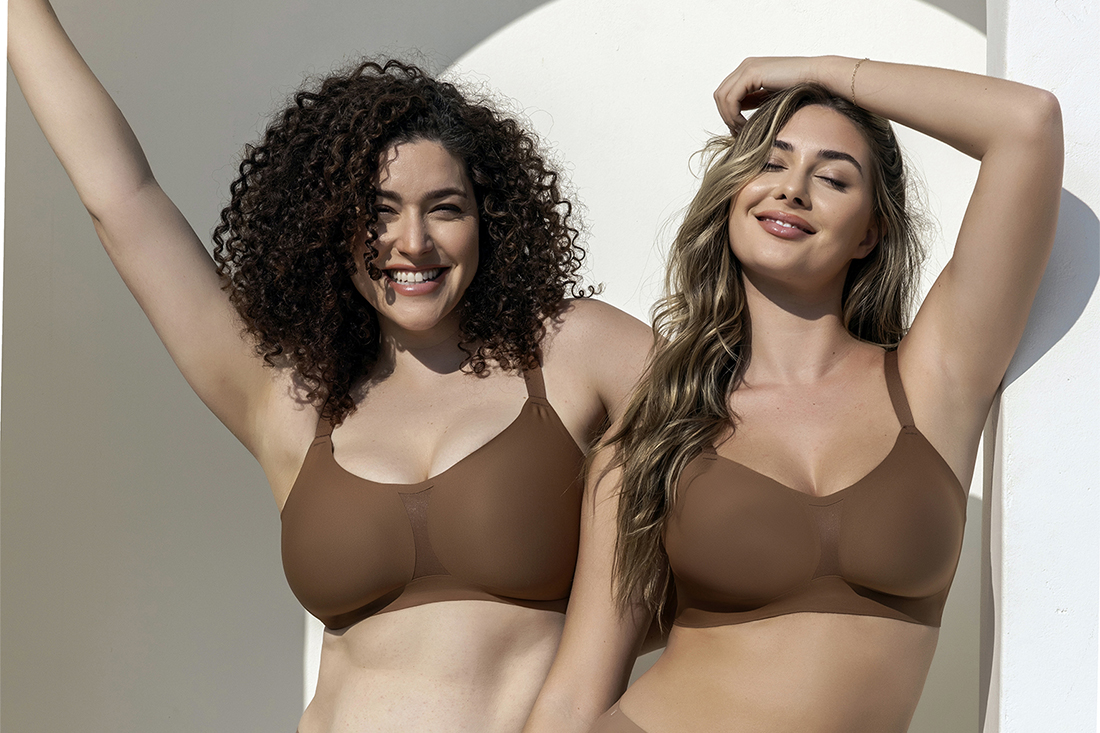
Why 38G Wearers Are Right to Be Skeptical
If you wear a 38G and you’ve tried a wire-free bra before, there’s a good chance it let you down. Not in a subtle, “this could be more comfortable” way — in a very literal, “I’m holding everything up with my hands by noon” way. The skepticism is earned. Wire-free bras have historically been designed with a C or D cup in mind, and the version marketed to larger sizes is often just a scaled-up version of that same inadequate structure. The result is a garment that looks supportive on a flat lay or a size-small model but collapses under real-world use.
Here’s the thing: a 38G wearer is dealing with significantly more volume than a 38C. The tissue mass is roughly double or more, the load on the band is much greater, and the cup geometry is more complex. A wire-free bra at this size isn’t just a comfort preference — it’s an engineering challenge. When it fails, it fails loudly: the cups flatten outward, the band rides up, and by the end of the day your bra has migrated into a position it was never supposed to be in.
So if you’ve given up on wire-free entirely, this post is for you. There are bras in this category that actually work at your size — but you need to know what you’re looking for.
What “Seamless” Actually Means in Bra Construction
The word “seamless” gets used loosely in lingerie marketing. Sometimes it means the cup has no visible seams at all. Sometimes it means the bra’s outer edge is seamless (so it doesn’t show under a T-shirt) but the cup itself has interior structure. And sometimes it’s just a descriptor for a soft, stretchy fabric with no real structural meaning at all.
For the purposes of support, what matters is the interior architecture. A truly seamless molded cup is made from a single piece of material that’s been shaped under heat — there are no seams inside the cup because the cup is a formed unit. This is very different from a wire-free bra with fabric panels that happen to be smooth on the outside. Both can technically be marketed as “seamless.” Only one has the structural integrity to reliably hold a 38G.
Molded seamless cups — especially those made from spacer foam — have a rigid shape that maintains its form independently of the fabric. The cup holds you, rather than you holding the cup in place with friction and hope. This distinction is everything at larger cup sizes. When you’re evaluating a wire-free bra, don’t just look at the outer fabric texture. Feel the cup itself: does it hold its shape when empty? Does pressing on the cup cause it to deform and spring back, or does it collapse and stay flat? The former is what you want.
The Engineering of Wire-Free Support at Larger Cups
Understanding why most wire-free bras fail at larger cups requires a brief foray into bra mechanics. In a wired bra, the underwire performs two jobs: it defines the base of the cup (creating a rigid frame that holds the breast tissue in place), and it distributes the weight of the breast into the band and side panels. Remove the wire and you’ve removed both functions simultaneously. Something else has to replace them.
In a well-engineered wire-free bra, those functions are redistributed. The base of the cup is reinforced with a firmer foam or a structured lining that mimics the shape-defining role of the wire. The side panels are wider and often reinforced with additional fabric or boning-like channels that prevent the cup from migrating laterally. The band is typically wider and made from a higher-stretch recovery fabric, so it doesn’t loosen as the day goes on.
The key physics here: a wire-free bra relies almost entirely on the band for vertical support. If the band is too narrow, too loose, or made from a fabric that loses elasticity over time, the support breaks down. This is why sizing is especially critical in wire-free styles at 38G — you cannot compensate for a loose band with tighter straps the way you sometimes can in a wired bra.
Additionally, the cup needs to contain lateral movement. Without a wire to define the cup’s outer edge, tissue can migrate toward the armpit. Reinforced side panels and a higher underarm cup construction address this. Look for bras where the cup fabric wraps further toward the side of the torso than a standard style.
What to Look for in Foam, Panels, and Band Width
When you’re shopping for a wire-free bra at 38G, here’s a practical checklist of construction features:
Spacer foam cups: Spacer foam is a three-dimensional fabric with a mesh-like structure that creates air channels. It’s firmer than standard foam but lighter, and it’s excellent at holding its shape. Look for this in molded cup styles — it’s often described as “spacer,” “3D foam,” or “breathable foam.”
Wide band: A band that measures at least 4 to 5 centimeters at its widest point (usually at the back) distributes weight more effectively. Narrower bands concentrate load and are more prone to riding up.
Side panel reinforcement: Some wire-free bras include a side support panel — a more structured section of fabric at the armpit edge of the cup. This is the wire-free equivalent of the wire’s outer anchor point.
High-recovery elastic: The elastic in the band and the frame of the cup should feel firm and spring back immediately when stretched. Soft, lax elastic is a warning sign.
Hook-and-eye count: More hooks mean a more stable band connection. Three or four columns of hooks are preferable at this size.
Parfait Wire-Free Styles Worth Trusting at 38G
Parfait has built several wire-free styles specifically for fuller busts — meaning the construction starts from the assumption of significant cup volume, not as an afterthought.
The Holly Wire-Free Padded Bra (P8000) uses a seamless spacer foam cup and a wide, firm band designed for everyday wear. The spacer foam holds its shape through a full day, and the side panels provide enough lateral containment to prevent the migration issues that plague generic wire-free styles. This is probably the most structured option in Parfait’s wire-free lineup and the best starting point for a 38G wearer who needs genuine all-day support.
The Simplicity Wire-Free Bra (P2400) takes a different approach — it’s a lightly padded style with a focus on comfort and clean lines. The cup structure is softer than the Holly, but the band construction is similarly robust. For days when you need wire-free support without the full structure of a padded cup, this is worth trying.
The Adriana Wire-Free Bralette (P5482) is a lace wire-free style that leans more toward soft support than engineered lift. At 38G, it’s best suited for lower-impact days — working from home, a relaxed weekend — rather than as an all-day workwear option. That said, the wider-than-average band and lace construction provide more structure than a standard bralette.
For sizing, Parfait covers bands 28—42 and cups through K (US sizing), so a 38G falls well within their specialty range. If you’re new to the brand, the Fit Fix sizing tool at parfaitlingerie.com can help you confirm your size before ordering.
How to Test a Wire-Free Bra’s Real Support
Before committing to a wire-free bra, run it through a practical test. Put it on and wear it for two to three hours around the house. Then check these things:
Band position: The back band should sit level or very slightly lower than the front. If it’s riding up toward your shoulder blades, the band is too loose or the cups are pulling it up — both signs of inadequate support.
Cup coverage: The cup should contain all breast tissue without cutting in or gaping. Minor gaping at the top of the cup in a wire-free molded style can be normal (wire-free cups often have a more forward projection), but significant gaping or overflow means the cup shape isn’t matching your breast shape.
Shoulder test: Slip both straps off your shoulders. If the bra immediately loses its shape and your breasts drop, the bra is strap-dependent rather than band-supported. A well-fitting wire-free bra should hold its position and provide meaningful support even without straps.
Movement check: Walk briskly, bend over, and stretch your arms overhead. The band should stay put and the cups should contain movement without bouncing or migrating.
Making the Switch: A Realistic Transition Plan
Switching from wired to wire-free after years of wired bras takes some adjustment. Here’s a practical approach:
Start with part-time use. Wear your new wire-free bra for half a day while you transition. Your body is used to the firm containment of underwire, and the different feel of wire-free support takes adjustment — both physically and psychologically.
Don’t size down in the band hoping for more support. A tighter band doesn’t always mean better support in wire-free styles — it can distort the cup shape and cause discomfort without improving lift. Stick to your correct band size and focus on cup accuracy.
Give it a proper trial period. Wear the bra at least three or four times before deciding if it works for you. Initial impressions with wire-free bras can be misleading because they feel so different from wired styles.
Keep your wired bras for high-impact days. Wire-free doesn’t have to be all-or-nothing. Many 38G wearers rotate wire-free styles into their wardrobe for lower-demand days and reserve wired bras for long workdays, active days, or occasions when maximum support is essential. The goal is having options, not making an irreversible switch.
With the right construction features and accurate sizing, wire-free support at 38G is genuinely achievable. The key is knowing what to look for — and not settling for a bra that looks like it should work but doesn’t.


