
Bras That Lift Toward Center Without Pushing Outward: A Shape Guide
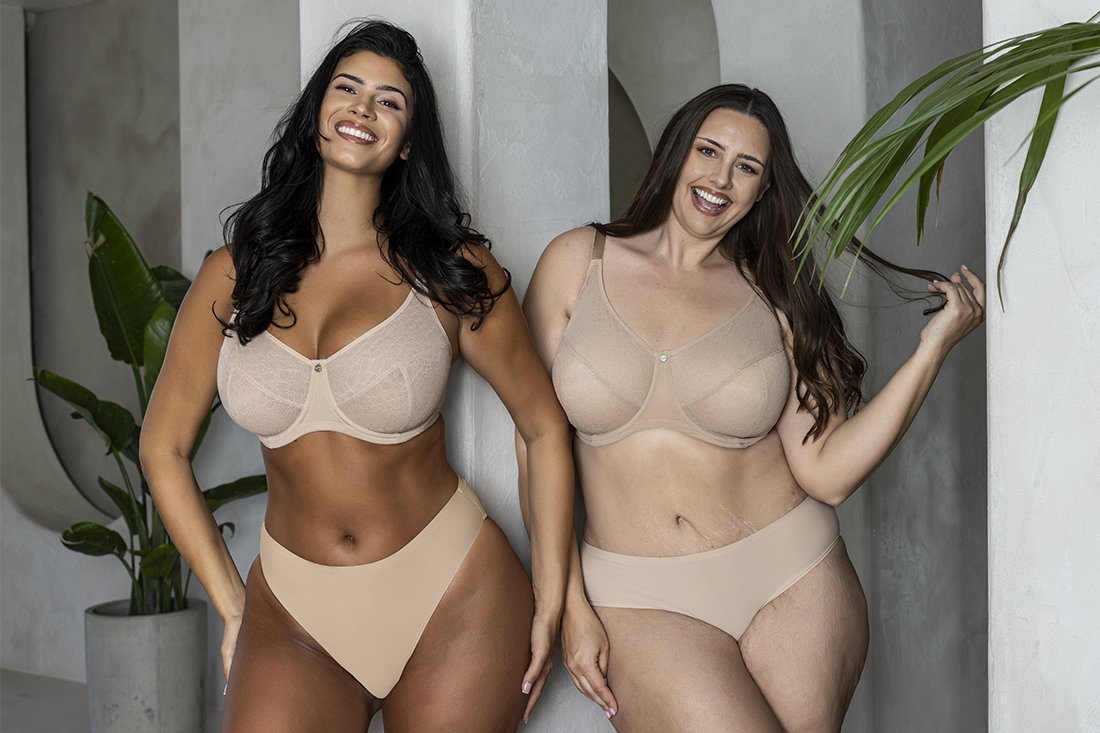
Center Lift vs. Lateral Push: Understanding the Difference
Not all lift is the same. When most people talk about a bra that lifts, they mean upward elevation — the general impression of a higher, more defined bust. But the direction of that lift matters enormously for how the bust looks and feels, and different bra constructions produce lift in different directions.
Center lift moves breast tissue upward and inward — toward the midline of the body — creating a profile that is elevated and centered without projecting outward from the chest wall or spreading toward the sides. Lateral push, by contrast, moves tissue outward and to the sides, sometimes creating a wider, lower silhouette despite technically lifting the bust off the chest.
Many women specifically want center lift without outward projection. Push-up bras are
Parfait Styles That Lift and Center
Parfait’s minimizer styles are engineered with redistribution in mind rather than simply compression, and they represent a strong option for women who want center lift without outward spread.
The Pearl Minimizer Bra (P60921) uses a seamless cup construction that provides smooth, even coverage while the cup shape directs projection forward and centrally rather than laterally. Its side panel tension keeps tissue contained without compressing it against itself.
The Enora Minimizer Bra (P5272) offers structured cup seaming that contributes to upward lift, with a gore that sits at a height that provides sternum support without digging in. The Enora’s construction is designed specifically for fuller cup sizes where controlling both projection and lateral spread matters most.
For those who don’t need minimizer-level projection control but still want center lift from a well-constructed underwire bra, the Charlene Balconette Bra (P5000) creates strong upward lift from its balconette cup shape and defined gore. The balconette profile — wide, horizontal cup opening, high side and center coverage — is naturally suited to centered lift rather than outward projection.
The Emily Unlined T-Shirt Bra (P7800) and Bliss Padded T-Shirt Bra (P7000) offer clean, smooth cup profiles for everyday wear, with the underwire placement and cup construction Parfait uses in its fuller-bust range to provide genuine lift rather than simply coverage.
Fit Tips for Achieving the Shape You Want
Even the best-engineered bra won’t create center lift if the fit is off. Here are the key fit points that determine whether center lift happens:
The band must be firm. If the band rides up at the back, the front of the bra will drag down, pulling the cups and the tissue in them downward and outward rather than upward. A band that fits means it stays parallel to the floor all the way around.
The gore must sit flat on the sternum. Press the gore gently against your sternum — it should make contact along its entire length. If it floats, either the cups are too small, the cup shape doesn’t suit your breast root width, or both. A floating gore means the cups are pulling away from center, which defeats center lift entirely.
The cups must be filled without overflow. If tissue is escaping over the top or sides of the cup, the cup is too small. An overfull cup creates the pushed-outward shape that center lift is meant to avoid.
Use Parfait’s Fit Fix tool at parfaitlingerie.com to check your measurements before choosing. The fuller-bust range — bands 28—42, cups C—K — means there are genuine options at every size, and getting the right measurement is the first step toward getting the right shape.
What Construction Creates Lift Without Outward Projection
Several construction features work together to create center lift without lateral push or excessive forward projection:
A full cup or balconette shape with structured cup seaming creates a projection profile that is more forward-and-upward than outward. The cups cradle the breast from below and the sides and lift it, rather than pushing from underneath.
Side panels with strong tension hold tissue in from the sides. A well-fitted bra with firm side panels prevents lateral migration regardless of how the cups are shaped — tissue stays in the cup rather than spreading toward the arms.
A center gore that sits flat against the sternum keeps both cups from migrating outward. When the gore floats away from the sternum, the cups have drifted, and the bust is being pushed laterally rather than lifted centrally.
Moderate cup projection (rather than deep or padded cup projection) results in a shape that doesn’t push the bust dramatically away from the chest. A contour cup with moderate projection creates lift and shape without adding the appearance of significantly more volume or forward extension.
Gore Height and Its Role in Centering the Bust
The gore is the vertical strip of fabric between the two cups at the center front of the bra. Its height — how far it extends up the sternum — has a direct relationship to how centered and lifted the resulting bust shape is.
A taller gore sits higher on the sternum, separating the cups and providing a clear center channel. This creates definition between the breasts and encourages each cup to project independently and upward rather than together. Balconette and full-cup styles often have moderate to tall gores that serve this purpose well.
A lower or plunge gore (short and cut low at the center front) brings the cups closer together, reducing the separation between breasts. This can look different depending on breast shape — for some women it creates cleavage and center lift; for others it allows tissue to push inward without adequate separation, creating compression rather than lift.
For center lift specifically, a moderate gore height tends to work best: tall enough to provide structural separation and anchoring, but not so tall that it digs into the sternum or pulls the cups apart uncomfortably.
The Mechanics of Underwire Angle and Cup Shape
The underwire is the primary architectural element that determines where breast tissue goes. The wire sits at the base and sides of the breast, and its angle, curvature, and width define the shape that the cup creates.
A wire with a deep curve and relatively narrow width (a narrow wire profile) runs more closely along the natural breast root — the area where the breast attaches to the chest wall. This type of wire encourages tissue to move upward and inward. When the wire sits snugly against the breast root at the sides and base, it doesn’t allow tissue to migrate toward the armpits, and the cup shape directs projection forward and slightly upward.
A wide wire with a shallower curve sits further from the breast root. It creates more surface coverage but allows more lateral migration — breast tissue can spread toward the arms more easily because the wire doesn’t contain it. Some women need wider wires for comfort (if their breast root is naturally wide), but for women whose breasts project forward and who want center lift, a wide wire often works against them.
Cup seam placement and cup height also contribute. A cup with a vertical seam running up the center of the cup creates a point of projection forward and upward. A cup with a horizontal seam that divides the cup into upper and lower sections tends to create a rounder, more lifted shape. Both can create center lift, but they do it differently, and one may work better for a given breast shape than the other.
Why Push-Up Bras Often Fail This Goal
Push-up bras are explicitly engineered to push breast tissue upward and inward from the bottom and sides of the cup — which sounds like center lift, but in practice often produces lateral projection and cleavage by pushing tissue against the sternum and upward out of the cup rather than toward the sternum and gently upward in a supported way.
The angled pads in a push-up bra sit at the outer and lower edges of the cups. They push tissue diagonally toward the center and up, which can create a pushed-together look — but that push often results in breast tissue spilling over the top of the cup rather than being cleanly lifted. For larger cup sizes, this effect is amplified: more tissue to push, more likely it will overflow.
Push-up construction is also specifically designed to increase outward projection — the padded base moves the bust further from the chest wall. This is the opposite of what many women want when they ask for center lift. They want the bust to feel elevated and contained, not pushed further forward.
The better alternative is a bra where the cup itself creates the lift through its shape, seaming, and underwire placement, rather than relying on padding to mechanically force tissue in a direction.
engineered to increase projection — not to center or lift — and for women who want lift without outward push, they often produce exactly the wrong result. Understanding which construction features create which type of lift lets you shop intentionally.


