Shop Now New Bras Undies Lingerie Fit Blog
×

What Size-Inclusive Marketing Actually Means

The phrase “size-inclusive” appears in so much lingerie marketing that it has become nearly meaningless. Brands use it to describe everything from a size range that extends to a 2X — which is not especially expansive — to a genuine commitment to representing and serving bodies across a wide range of sizes and shapes. These are very different things, and conflating them hurts the shoppers who most need accurate information.

Authentic size-inclusive marketing starts with the product itself. A brand cannot market inclusivity if the bra stops at a 38DD. Marketing is downstream of design. If the size range is shallow, no amount of diverse casting in campaign photography changes the fundamental reality of what’s available to buy.

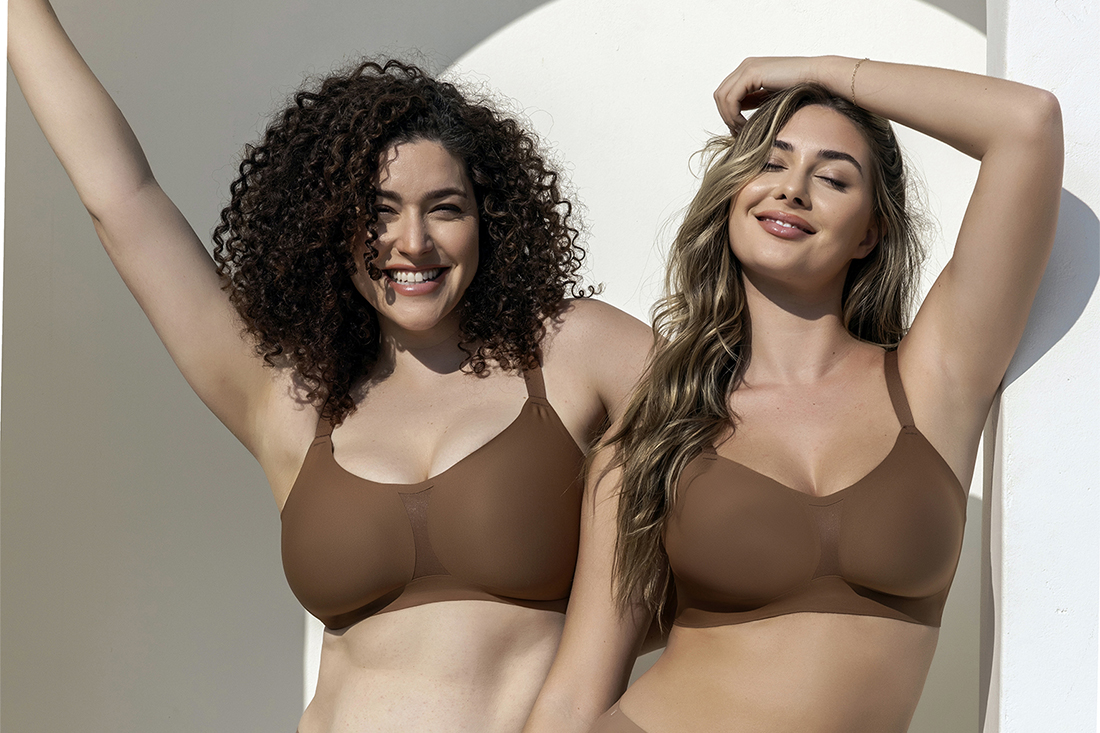
True size-inclusive marketing means: a product range that genuinely covers a wide size spectrum, models who represent that range authentically and who are actually wearing the sizes in their size range (not a smaller model shot first with the large-size products photographed separately), and communication that speaks to diverse bodies as the default rather than as a special acknowledgment.

The Difference Between Tokenism and Representation

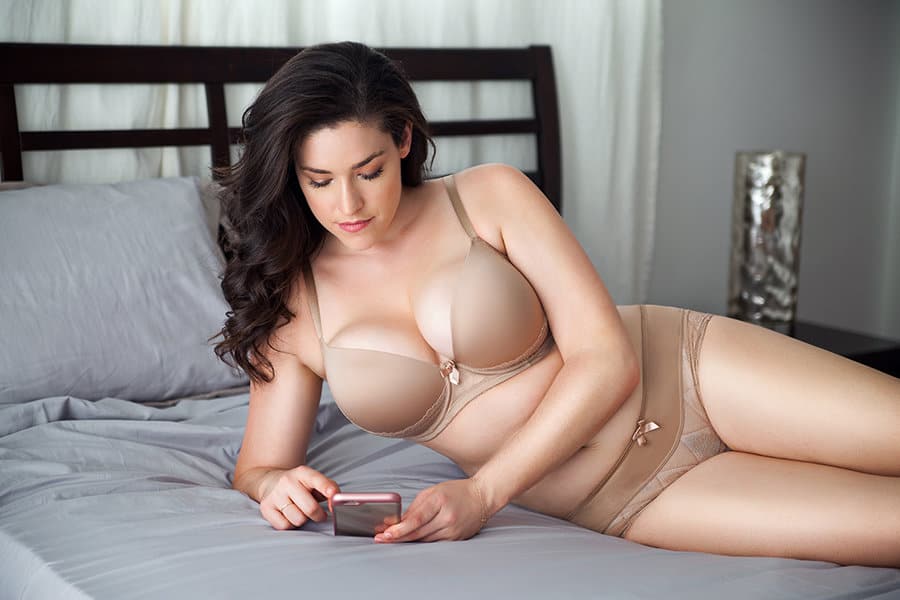
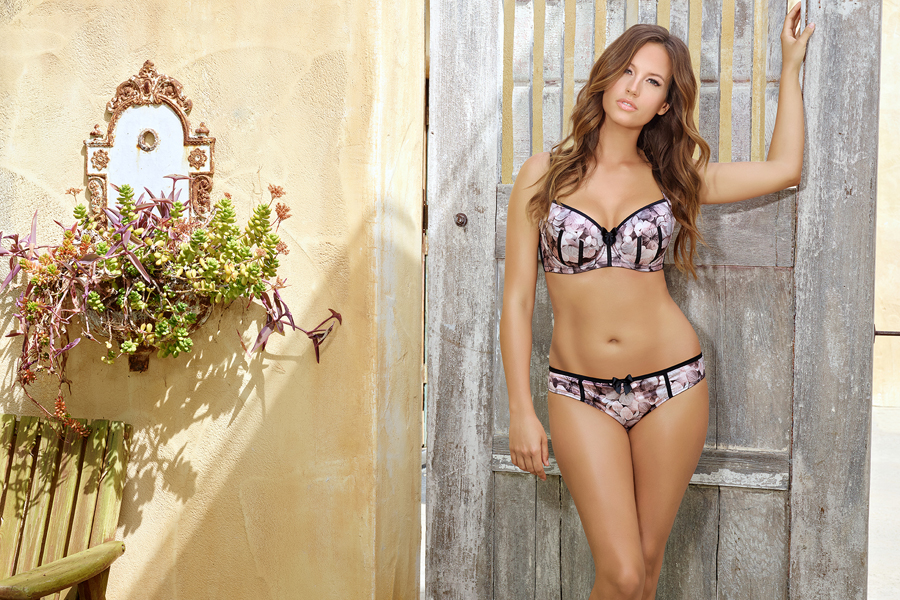
Tokenism in lingerie marketing has a recognizable pattern. A campaign features one plus-size model alongside several straight-size models. The larger model is styled in darker, more “slimming” colors while the smaller models wear the full color range. The larger size range appears in a single product photo while the standard range gets lifestyle shots, editorial treatment, and the full product array.

That is not representation. It is an acknowledgment of existence, which is different. Representation means that someone shopping in a 40H finds herself reflected across the product range with the same visual richness as someone shopping a 34C. It means the campaign photographer was briefed to shoot all sizes with the same lighting, styling, and creative approach.

The functional test: look at a brand’s website filtered to your size range. If the product photography drops in quality, becomes more clinical, or shows fewer lifestyle images for larger sizes, that’s a signal about where the brand actually places its investment. Visual equity across size ranges is not automatic — it requires active decision-making.

What to Look for in a Brand’s Visual Identity

When evaluating a brand’s marketing authenticity, look at several elements beyond the campaign images themselves.

Model sizing: Do the models wearing larger cup sizes appear to be actually wearing those sizes? An E or F cup looks different from a B cup in ways that an experienced eye can read. If a brand’s “DD+” photography looks indistinguishable from their standard-cup photography, ask whether the samples were actually made in those sizes or whether the marketing is aspirational rather than accurate.

Customer imagery: Does the brand feature real customer photos, and if so, across what size range? User-generated content is hard to fake and tends to reflect who actually shops the brand. A brand with genuine size diversity in its community will show that diversity in customer photos.

Language and copy: Does the brand’s copy speak to fuller-bust shoppers with specific knowledge, or does it use vague language that could apply to anyone? Specificity — mentioning the engineering choices that serve fuller cups, the construction details that matter at larger band sizes — signals that the brand actually knows its customer rather than gesturing at them.

Why Marketing Authenticity Often Predicts Product Quality

There is a meaningful correlation between how a brand markets to fuller-bust shoppers and how well its products actually serve them. This sounds counterintuitive — marketing and product development are separate functions. But the connection runs through organizational values.

A brand that has genuinely committed to serving the fuller-bust market at a structural level — in its size range, its fit modeling, its grading standards — tends to express that commitment consistently across marketing, customer service, and product design. The investment shows up everywhere because it reflects a decision about who the brand is for.

Brands that bolt size-inclusive messaging onto a product line that wasn’t actually designed for that range tend to show the seams. The marketing language doesn’t match the product copy. The customer service team doesn’t have answers to specific fit questions. The return rate for larger sizes is high and the brand doesn’t acknowledge it. These are symptoms of the same underlying condition: a brand that hasn’t genuinely made the fuller-bust customer central to its design process.

Parfait’s Approach to Representation

Parfait was founded in 2010 with an explicit commitment to the fuller-bust and full-figure market. That founding intention shapes the product range — 95 of 105 bra styles in DD and above, bands up to 42, cups up to K — and it extends to how the brand presents itself visually.

The brand has earned coverage in Forbes, Glamour, Popsugar, Vogue, and the New York Times, not as a curiosity but as a substantive player in the fuller-bust category. That recognition reflects a brand that operates with enough seriousness and consistency to be taken seriously by mainstream editorial outlets.

Products like the Charlene Balconette Bra (P5000), the Adriana Wire-Free Lace Bralette (P5482), and the Holly Wire-Free Padded Bra (P8000) are styles that often don’t exist in meaningful form at larger cup sizes from mainstream brands. The fact that they exist at Parfait — and in a genuine size range — reflects a product philosophy that starts from the fuller-bust customer’s needs rather than scaling down from a standard-size template.

The Bliss Spacer T-Shirt Bra (P7000) and Emily Unlined T-Shirt Bra (P7800) illustrate a related point: Parfait offers multiple takes on the everyday T-shirt bra in extended sizes, giving shoppers genuine choice rather than a single “this is what we have for you” option. That multiplicity is itself a form of representation — it treats the fuller-bust shopper as someone with preferences, not just a size problem to solve.

What Fuller-Bust Shoppers Deserve to See

Fuller-bust shoppers deserve to see themselves reflected in lingerie marketing with the same specificity and care that standard-size shoppers have always experienced. Not as an afterthought. Not as a special campaign. As the default.

That means lifestyle imagery shot with full care and intention. It means model casting that reflects the actual size range of the products. It means copy that speaks to real fit experiences rather than generic body-positive language that could apply to anyone. It means unretouched imagery — or at minimum, honest retouching practices that don’t visually shrink or reshape the bodies wearing the clothes.

It also means honest sizing. A brand that claims to be size-inclusive but grades its patterns by simply adding fabric to a standard-size template without adjusting the structural architecture for larger cups is not truly serving the fuller-bust customer, no matter how the marketing reads. Authentic representation requires authentic product design.

How to Vote With Your Purchase

Consumer behavior drives brand investment. When fuller-bust shoppers choose brands that have genuinely built their size range, their fit philosophy, and their visual identity around the fuller-bust experience, those brands grow. When shoppers reward tokenism — buying from brands that add a few extended sizes without investing in genuine fit — the incentive for authentic investment diminishes.

This is not about moral purity in consumption. It’s about recognizing that purchase decisions are the most direct signal available to brands about what shoppers value. A brand that sees its fuller-bust styles convert well and generate positive reviews will invest more in that range. A brand that sees its extended sizes languish in low-quality photography with limited style options and reads zero push-back will not change.

Parfait’s founding philosophy — “help women feel totally supported on the inside and out” — was not written as a marketing tagline first. It was a founding intention that shaped the product range, the size matrix, and the brand’s positioning in the market. That’s the difference worth seeking out. Visit parfaitlingerie.com to explore the full collection.

Why Full-Bust Shoppers Keep Getting Burned by Subscription Boxes

Subscription lingerie boxes have a charming premise: someone else curates beautiful pieces for you, they arrive at your door, and you discover brands you never would have found on your own. For a straight-size shopper with a common bra size, the model actually works pretty well. For anyone shopping a fuller-bust size — say, a 36G or 38H — it tends to fall apart almost immediately.

The complaints are remarkably consistent. A box arrives and the bra inside only goes up to a 36DDD. Or it comes in bands starting at 34 but nothing above a D cup in the larger bands. Or the “extended sizing” tier costs more and still caps out at a 38F. These are not edge cases. They are the structural reality of what most subscription box services are

The Economics Behind the Size Gap

Subscription boxes operate on a bulk-buying model. They purchase inventory from brands in advance, often at discounted wholesale rates, and then assemble those items into curated shipments. To make that work financially, they need to stock items that will move reliably across a broad customer base. Sizes that account for a small percentage of their total subscriber pool are risky to hold.

Fuller-bust sizes — DD and above, particularly in larger band sizes — represent a category that mainstream brands have historically underinvested in. The result is that the subscription box’s wholesale supplier options are limited. They can source a 36C from fifty different brands. They can source a 38H from perhaps five, and at a higher unit cost.

Return logistics add another layer. Subscription boxes with a try-before-you-buy component absorb return costs. Fuller-bust bras, which require more structural engineering and more fabric, are more expensive to produce — meaning the margin hit on a return is steeper. The business math pushes service providers toward standard sizing, even if they publicly claim otherwise.

What this means practically: even subscription services that market themselves as size-inclusive rarely stock above an F cup in any meaningful inventory depth. You might find one or two options in your size if you’re lucky. But that’s not discovery. That’s the scraps.

What You Actually Need From a Discovery Experience

Before building an alternative strategy, it’s worth being clear about what makes lingerie discovery valuable in the first place. What are you actually trying to do?

Most shoppers describe three things they want from a discovery experience: finding styles they wouldn’t have thought to try on their own, getting a sense of how a brand fits without committing fully, and gradually learning their preferences — what construction details they love, what they can’t tolerate, what they want for different occasions.

A subscription box, at its best, delivers on all three. The problem is that for fuller-bust shoppers, the curated pool is too shallow to be genuinely exploratory. You end up discovering variations on the same limited range rather than expanding your sense of what’s possible.

The alternative is to build your own rotation — but to do it with intention, not randomly.

Building Your Own Curation Strategy

The do-it-yourself version of lingerie discovery is more powerful than any subscription box because you get to design it around your actual size and preferences. Here is a framework for making it systematic.

Start by identifying your functional wardrobe gaps. Most people need a few core styles: an everyday T-shirt bra, an option that works under lower-cut tops, a wire-free bra for long days or weekends, and something that feels a little more elevated when you want it. Write those down before you browse anything.

Next, commit to exploring one new style per rotation cycle — roughly every six to eight weeks. This is slow enough to be affordable but regular enough to build real knowledge over time. Give yourself permission to try something that doesn’t immediately make sense on the hanger. Fuller-bust bras often look architectural on display but transform entirely when worn.

Finally, keep notes. Even mental notes about what you did and didn’t like — the underwire placement, the strap width, how the cups felt after four hours — build into a personal fit map that no algorithm can replicate.

Parfait as a Discovery Platform

Parfait Lingerie, founded in 2010, was specifically built to serve the fuller-bust and full-figure market that mainstream brands consistently underserve. With bands from 28 to 42 and cups from C to K, and 95 of their 105 bra styles available in DD and above, the size range is substantive enough to actually function as an exploration space rather than a set of token options.

What makes Parfait useful as a discovery platform specifically is the range of construction types available across the size spectrum. You are not choosing between three versions of the same bra. You can compare how a structured underwire balconette sits differently from a soft wire-free style, how a longline changes the sensation of support, how different fabrics and cup constructions interact with your body.

Parfait’s Fit Fix sizing tool at parfaitlingerie.com is a useful starting point if you’re uncertain about your current size or switching from a brand that may have had you in an ill-fitting size for years — which is more common than people realize.

Your First Five Styles to Try

If you’re building a discovery rotation starting at Parfait, here’s a suggested first sequence that covers different construction approaches and use cases.

The Shea Spacer T-Shirt Bra (P6061) is a logical first pick for a daily-wear baseline. A well-fitted T-shirt bra is the yardstick against which you measure everything else. Once you know what a good everyday bra feels like on your body, you have a reference point.

The Charlene Balconette Bra (P5000) introduces a different cup architecture — the balconette lifts differently and suits different necklines. Many fuller-bust shoppers who have only tried full-cup or T-shirt bras are surprised by how much they enjoy the balconette shape.

The Holly Wire-Free Padded Bra (P8000) covers the wire-free category, which many shoppers assume means sacrificing support. Holly proves that wrong. It’s worth experiencing what modern wire-free construction can do before you write the category off.

The Simplicity Wire-Free Bra (P2400) offers a different take on wire-free — lighter and more minimal. Having both Holly and Simplicity in your rotation reveals the spectrum of what wire-free can feel like across different occasions.

Rounding out the lingerie drawer, the Luxlacy Mesh Hipster (P9005) and Adriana Wire-Free Lace Bralette (P5482) bring in texture and visual interest. The bralette in particular is a style that many fuller-bust shoppers have been told won’t work for them — Parfait’s version challenges that assumption.

How to Rotate and Discover Over Time

Once your first rotation is established, the discovery process becomes self-directing. You’ll know which construction you reach for most often, and that information tells you where to explore next. If you loved the balconette, you might try a plunge next. If the wire-free options became your daily staples, you might experiment with different fabric weights or silhouettes in that category.

Treat the process the same way you’d approach building any other wardrobe capsule: with patience, intentionality, and a willingness to be surprised. Subscription boxes try to shortcut this process, but for fuller-bust shoppers, that shortcut rarely leads anywhere satisfying. The longer game, built around a brand that actually serves your size, pays off in a drawer full of bras you genuinely want to wear.

Visit parfaitlingerie.com to explore the full range and use the Fit Fix tool to confirm your size before you begin.

able to offer, and understanding why that is makes the whole category make more sense.

This is not a failure of good intentions. Most subscription box companies genuinely want to serve a wider range of customers. The problem is systemic — built into the economics of how subscription boxes work and who manufactures lingerie at scale.

The 40DD Gap Nobody Talks About

Ask most lingerie brands whether they carry extended sizing and you will get an enthusiastic yes. Check their actual size range and things get more complicated. Many brands that market themselves as size-inclusive quietly stop their fuller-cup styles at a 38DD or 38DDD. A 40DD, which sits right on the border of what mainstream brands call extended and what specialty brands handle as standard inventory, falls into a peculiar gap.

It is a size that is too large for most department-store lingerie sections but small enough that some specialty retailers do not prioritize it as a core size. The shopper wearing a 40DD or 40E often finds herself on the outside of two markets simultaneously, told she is too large for one and not plus-size enough for another.

The coordinated set problem is even more pronounced at these sizes. Finding a bra that fits is hard enough. Finding a matching panty in the right size, cut, and colorway from the same collection and in the same fabric requires a brand that has genuinely thought through the full wardrobe, not just the bra. That level of design commitment is rarer than it should be, and knowing how to identify it saves significant time and frustration.

What Coordinated Set Actually Means (and What It Does Not)

Coordinated gets used loosely in lingerie marketing. Technically it means pieces from the same collection that share a colorway, fabric, or design detail, usually sold as a set or at least styled together. In practice, what gets called coordinated varies enormously.

At one end of the spectrum, you have true sets: a bra and panty made from the same fabric, in the same colorway, with matching lace or trim, sold together or available as individual pieces that are clearly designed as a pair. At the other end, you have brands that photograph a black bra next to a black brief of a different cut and call that coordinated.

What to look for in a genuine coordinated set: the same fabric composition across both pieces, matching colorways rather than merely similar ones, and the panty sized to work proportionally with the bra. A brand that offers a 40DD bra alongside a panty line that only goes to a size XL is not designing for the same body throughout. Check both size ranges independently before assuming a set is genuinely available in your size.

How to Vet a Brand’s Real Size Range

Marketing copy is not a reliable guide to actual size availability. To genuinely evaluate whether a brand serves 40DD and above, a few checks are worth running.

Go directly to the product page rather than the size guide or marketing landing page. Filter by your band and cup size and see what actually comes up. If a brand claims to go to a 40G but you can only find two styles in that size, that is not a real offering. It is a token presence that signals the brand views larger sizes as a footnote rather than a design priority.

Check the panty range independently. Some brands size their panties by XS through 3XL and some by numbered waist size. Cross-reference against your own measurements, not just the letter size you are used to from bra shopping.

Look at customer reviews specifically from larger sizes. Fuller-cup customers who leave reviews frequently mention whether the cups run small, whether the underwire is shaped for a projected cup, and whether the overall construction holds up over time. That firsthand information is more useful than any size chart or marketing claim.

What to Look For in a Coordinated Set at 40DD+

Beyond size availability, construction quality matters enormously at 40DD and above. A few priorities to keep in mind when evaluating any style.

Underwire shaping: In larger cup sizes, underwire should be shaped to follow the natural projection of the breast rather than running flat across the chest. A flat underwire that gaps at the sides is a sign the bra was designed for a smaller cup and simply scaled to a larger band size without redesigning the cup architecture.

Strap placement: Wider-set straps suit fuller busts better than straps that sit close to the neck. Check where straps attach to the cup and whether they are adjustable over a meaningful range. Narrow-set straps on a wider frame will dig into the shoulders regardless of how the band fits.

Fabric weight and composition: Heavier fabrics offer more structure and last longer at larger sizes. Thin lace-only construction works beautifully in smaller cup sizes but often does not provide enough internal support in DD and above without additional lining or a boning panel.

Parfait Collections That Deliver at These Sizes

Parfait’s size range, bands 28 through 42 and cups C through K, means that 40DD is genuinely within the standard size matrix rather than an afterthought. Several collections pair naturally across bras and bottoms in these sizes.

The Charlene Balconette Bra (P5000) pairs naturally with the Luxlacy Mesh Hipster (P9005) and the Luxlacy High-Waist Brief (P2005). The delicate mesh aesthetic carries across both pieces in a way that feels intentional rather than assembled.

The Shea Plunge Bra (P6062) and Shea Spacer T-Shirt Bra (P6061) both coordinate with the Bonded Hipster (PP505). The clean, minimal aesthetic of the Shea collection reads as coordinated even across different styles within the same line.

The Olivia Plunge Bra (P4000) offers a different silhouette option. For shoppers who want a plunge neckline in their coordinated wardrobe, Olivia’s unlined construction in extended sizes is genuinely difficult to find elsewhere at this size range.

Mix-and-Match Strategies That Still Look Intentional

True collection coordination, meaning exact matching fabric and colorway across bra and panty, is the ideal but not always achievable. Strategic mixing can look equally put-together with a few guiding principles.

Tone-on-tone works well. A nude bra with a nude-adjacent brief in the same general warmth family reads as coordinated even if the fabrics differ. Mixing cool and warm neutrals is where it starts to look accidental rather than intentional.

Texture pairing also works. A smooth cup bra with a lace panty reads as a considered choice if both pieces are in the same colorway. The contrast becomes a design decision rather than a mismatch.

The combination that rarely works: a heavily detailed bra with a plain brief in a different color. If your bra is the visual statement, keep the bottom simple and in the same color family. Visual weight should balance, not compete.

Why It Matters to Get Dressed This Way

There is a practical answer and a more meaningful one. Practically, coordinated lingerie stays organized. When everything in a section of your drawer pairs together, getting dressed is faster and less frustrating. Decision fatigue is a real cost, and eliminating it at the foundation of your outfit has a cumulative effect.

The more meaningful answer is that getting dressed thoughtfully from the inside out changes how you carry yourself. When the foundation of your outfit is something you actually chose with care, it shows. Not to anyone else necessarily, but to you. That internal sense of being put together is its own kind of support.

Parfait’s founding philosophy, helping women feel totally supported on the inside and out, shapes the product design at every level. A brand that genuinely means that builds its size range to include 40DD as a real option, not a token addition. Visit parfaitlingerie.com to explore the current collections and use the Fit Fix tool to confirm your size before you start.

If you’ve ever peeled off a pair of underwear at the end of the day feeling sticky, itchy, or just plain overheated, you are not alone. For so many of us in fuller sizes, the search for everyday underwear that actually breathes can feel endless. The shelves are full of cute options, but a lot of them are made with synthetic fabrics, tight elastic, and seams in all the wrong places — a recipe for trapped heat, chafing, and discomfort that lasts from morning meetings to evening errands.

The good news: comfortable, breathable plus size panties absolutely exist. It just takes knowing what to look for — the right fabrics, the right cut, and a waistband that works with your body instead of against it. Here is a friendly, practical guide to finding underwear that keeps you cool, supported, and feeling like yourself all day long.

Why Underwear Traps Heat in the First Place

Heat and moisture build up in underwear for a few very specific reasons, and once you know them, shopping gets a lot easier.

Synthetic fabrics with no airflow. Cheap polyester, nylon, and slick “shapewear” blends are designed for stretch, not for breathing. They sit close to the skin and lock warmth and humidity in.

Tight, gripping waistbands. Elastic that digs in (especially on the tummy or hips) restricts circulation, creates pressure points, and traps heat exactly where you do not want it.

Compression where you do not need it. Smoothing panties can be wonderful for a specific outfit, but worn all day they often act like a second sauna — especially in summer or during active hours.

Seams and overlapping layers. Bulky seams at the legs and waist not only cause chafing on softer thighs, they also create thicker zones that hold onto warmth.

If your current go-to underwear ticks any of these boxes, the issue is the design, not your body. Let’s talk about what to choose instead.

The Best Fabrics for Breathability

Fabric is the single biggest factor in how cool your underwear feels. A few materials consistently win on breathability and comfort for plus sizes:

Cotton and cotton-like blends. Cotton is the classic for a reason — it’s soft, naturally breathable, and gentle on sensitive skin. Modern cotton-like blends keep that airy feel while adding just enough stretch to move with you. Parfait’s Cozy Cotton-Like Full Coverage Hipster (PP504) and Cozy Cotton-Like Full Coverage Brief (PP5032) are great everyday examples — soft hand-feel, full coverage, and plenty of airflow.

Modal and micro-modal. Made from beech tree fibers, modal is lightweight, silky-smooth, and very breathable. It also wicks moisture away from the skin, which makes it a smart pick for warm days or anyone who runs hot.

Moisture-wicking technical blends. Some performance fabrics now combine softness with active moisture management. These are excellent for workouts, travel, or any day where you know you’ll be on the move.

Lace and mesh panels. Pretty doesn’t have to mean stuffy. Lace and mesh aren’t just decorative — they are essentially built-in ventilation. Styles like the Luxlacy Lace/Mesh Hipster and the Luxlacy High-Waist Brief use sheer panels to let air move through, so you get the romance of lace without the trapped heat.

A quick tip: check the inside lining, not just the outer fabric. Many panties look like lace on the outside but have a synthetic gusset. A breathable cotton or modal gusset makes a real difference.

Styles That Actually Help With Airflow

Once you have the right fabric, the cut of the panty is the next thing to dial in. Different shapes move air around the body differently.

Hipsters sit on the hips with a moderate leg opening, which means good coverage without squeezing the upper thigh. They tend to be one of the most consistently comfortable shapes for fuller figures because nothing is pulling tight at the leg or waist.

French cut briefs have a higher leg line that lets more air circulate around the thighs. Parfait’s Bonded No-Panty-Line French Cut pairs that breathable shape with a seamless, bonded edge — so no rolling, no digging, no visible lines under clothes.

Full briefs and high-waist styles give beautiful coverage and a smooth line under dresses. The key is to choose a brief made from breathable fabric, like the Cozy Cotton-Like Full Coverage Brief, or a high-waist style with mesh panels for ventilation, like the Luxlacy High-Waist Brief.

Seamless and bonded styles use heat-bonded edges instead of stitched seams, which removes one of the main causes of chafing and heat buildup. The Bonded No-Panty-Line Hipster is a good example — smooth under everything, with no thick seam to trap warmth.

Avoid all-over compression for daily wear. Save the heavy smoothing pieces for occasions, and let your everyday underwear actually breathe.

What to Look for in a Waistband

The waistband makes or breaks a pair of plus size panties. A bad one rolls, pinches, or leaves marks that linger for hours. A good one disappears.

Wide, soft elastic. Wider bands spread pressure across more skin, so nothing digs in. Look for elastic that feels plush, not rigid.

No-roll construction. A waistband that folds down throughout the day creates a hot, bunched-up ridge. Bonded and high-waist designs tend to lay flat and stay put.

Sits where it’s comfortable for you. Some people love a high-waist brief that smooths over the tummy; others prefer a hipster that sits below it. Neither is right or wrong — comfort is personal.

True-to-size fit. If the waistband leaves deep marks or you find yourself tugging at it, size up. A panty that fits properly will feel almost invisible. Parfait’s panty range goes from S through 3XL, so there’s room to find your real size rather than squeezing into something too small.

Everyday Tips for Warm Weather and Active Days

A few small habits can make even the hottest days feel more comfortable:

Rotate styles through the week. Pair cotton-like hipsters for low-key days, mesh-panel high-waist briefs for warmer afternoons, and bonded French cuts for fitted outfits. Variety keeps every pair fresher.

Choose lighter colors in summer. They reflect heat rather than absorbing it, which can make a surprising difference under thin fabrics.

Change after workouts and long travel days. Sitting in damp underwear is the fastest path to irritation. Keep a spare pair in your bag.

Wash gently. Cool water and a mild detergent preserve elastic and breathable fibers, so your favorite pairs keep performing wash after wash.

Stock up smartly. Multi-packs are a budget-friendly way to refresh your drawer all at once, making it easier to try a couple of new styles alongside your tried-and-true picks.

Find Your New Everyday Favorites

You deserve underwear that feels as good as it looks — soft, breathable, supportive, and made for your real body. At Parfait, every panty is designed with fuller figures in mind, from the cotton-like Cozy line for breezy everyday wear, to the bonded seamless styles for a smooth finish under clothes, to the Luxlacy mesh and lace pieces for days you want a little something special.

Explore the full panty collection at parfaitlingerie.com — sizes S through 3XL — and build a drawer of breathable, comfortable favorites without overthinking it. Because feeling totally supported, on the inside and out, should be the easy part of your day.

Let’s be honest: finding a great bra for a dress is hard. Finding one that works in a larger cup size? That can feel almost impossible. You want the support, you want the shape, and you want the bra to disappear under whatever you’re wearing — no straps peeking out the neckline, no overflow at the top of the cup, no four-band industrial situation creeping up your back. If you’ve ever stood in a fitting room holding a dress in one hand and a too-tall, too-thick full-coverage bra in the other, you already know the frustration.

Here’s the good news. Half-cup bras — sometimes called demi or balconette bras — were essentially designed for this exact moment. They cover what needs to be covered, lift where lift is needed, and sit low enough that your favorite dresses finally have room to do their thing. And contrary to what many of us were told growing up, fuller-busted women can absolutely wear them. You just need the right construction. Let’s walk through what to look for, how the styles pair with different necklines, and which Parfait pieces are worth a closer look.

What Is a Half-Cup (Demi) Bra, Exactly?

A half-cup bra covers roughly the bottom half of the breast — typically from the underwire up to about the level of the nipple — leaving the upper portion of the bust exposed or covered only by a thin band of fabric or lace. The cups usually sit on a horizontal balconette frame, which is where the alternate name comes from. Straps are set wider apart than on a full-coverage bra, often landing closer to the outer edge of the shoulder.

Compare that to a full-coverage bra, which encloses the entire breast in fabric up to the collarbone area, with straps placed closer to the neck. Full-coverage is fantastic for everyday wear under tees and sweaters. But under a dress with any kind of neckline — V, sweetheart, scoop, off-shoulder — those high cups and inner straps show up uninvited. A half-cup gets out of the way.

Why Half-Cup Styles Work Beautifully Under Dresses

Three reasons. First, the lower cup line stays hidden under most dress necklines, so you get a smooth décolletage instead of a hard bra edge poking through. Second, the horizontal cup shape lifts the bust forward and slightly upward, creating a rounded, centered silhouette that flatters fitted bodices and wrap dresses especially well. Third, the wider-set straps mean you can wear scoop necks, boatnecks, and many V-necks without straps creeping into view.

For larger cup sizes specifically, a well-engineered half-cup does something a full-coverage bra often can’t: it gives you shape rather than just containment. A flat, minimizing silhouette can make a dress look boxy. A balconette gives the dress something to drape over.

What to Look For in a Half-Cup Bra for Fuller Busts

Not every demi bra is built to hold a D, G, or J cup. Here’s what separates the supportive ones from the decorative ones:

A wider band. The band does about 80% of the support work. Look for a band that’s at least 1.5 to 2 inches wide at the back, with sturdy hook-and-eye closures (three or four rows, not two).

Reinforced side panels. Boning or firm fabric panels along the sides keep breast tissue from migrating toward your underarms and stop the cups from collapsing outward.

Underwire that fully encases the breast. The wire should sit flat against your sternum in the center and extend up the side past the breast tissue — not stop short.

Cup construction with seams or padding. Unseamed molded cups stretch out fast in larger sizes. Look for seamed cups (two- or three-part) or substantial padded cups that hold their shape.

Adjustable, slightly wider-set straps. They should feel like a secondary support — never the main thing holding you up. If straps dig, the band is too loose.

Matching the Bra to the Dress Neckline

Different necklines call for slightly different versions of the same idea. Here are the pairings that tend to work best:

Deep V-neck or surplice: A plunge cut, like the Shea Plunge Bra (P6062) or the Olivia Unlined Plunge Bra (P4000), drops the center gore low so the bra disappears even under a dramatic V.

Wrap dress: A longline plunge gives you support plus a smoother line under the wrap of the fabric. The Pearl Longline Plunge Bra (P6091) is built for exactly this — it anchors the bust without bunching at the waist tie.

Sweetheart or scoop neck: A classic balconette is the move. The Charlene Underwire Padded Balconette Bra (P5000) lifts the bust into a rounded shape that mirrors the curve of a sweetheart neckline beautifully.

T-shirt or jersey dress: You want zero visible seams. The Casey Padded Plunge T-Shirt Bra (2801) or the Bliss Padded T-Shirt Bra (P7000) both have smooth molded cups designed to vanish under fitted knits.

Smooth fitted bodice (sheath, midi, work dress): Try the Emily Unlined Non-Padded Wired T-Shirt Bra (P7800) for a smooth, low-profile finish without extra padding.

Strapless or off-shoulder: This is where a true longline strapless earns its keep. The Elissa Full Bust Longline Strapless Bra (P50116) uses a longer torso and reinforced cups to hold a fuller bust without straps. At around $66, it solves a problem most of us thought was unsolvable.

Fit Tips for Fuller Busts

Even the best half-cup bra in the world won’t work if the size is off. A few things to check in the mirror:

The band should be snug and parallel to the floor. If it rides up your back, size down in the band (and likely up in the cup).

The center gore should sit flat against your sternum. If it floats, the cups are too small. If it pinches, they may be too large or the wire shape is wrong for you.

No spillage. A little upper-cup softness is fine in a demi style, but you shouldn’t see a second crease above the cup edge.

Straps adjust to about two fingers of give. Tight enough to stay put, loose enough that they don’t carry the weight.

If you’re between sizes, Parfait’s range runs from bands 28–42 and cups C through K, which means the in-between fits most brands skip — a 32H, a 38FF, a 40J — are actually on the menu. Their DD+ collection alone has nearly 100 styles, so a half-cup that fits is less of a unicorn hunt and more of a shopping trip.

Where to Start

If you’re new to half-cup bras and want a safe first try, start with the Charlene Balconette for everyday dresses, the Shea Plunge for anything with a V, and the Elissa Longline Strapless for special occasions. That trio will cover roughly 90% of the dresses in your closet.

Parfait has been making fuller-bust and full-figure lingerie since 2010, and their whole philosophy — helping women feel totally supported on the inside and out — comes through in every detail of the construction. Browse the full range at parfaitlingerie.com.

Your dresses deserve a bra that does its job and stays out of sight. With the right half-cup, both finally happen at the same time.

Quick answer: Sports bras with wide, stable bands are less likely to roll than narrow bands, especially for fuller busts. Look for a wide elastic band, longline construction, firm back support, multiple hooks, and straps that help share the load instead of leaving all the work to the band. For Parfait, Wave P6052 is the most relevant sports bra example because its product copy calls out a wide elastic band, wire-free zip front, internal hooks, cushioned inner slings, and wide adjustable ladder straps.

Why bands roll

A band can roll when it is too loose, too tight, too narrow, or fighting the shape of the rib cage. Rolling can also happen when the cups are not supportive enough. If the cups do not control movement, the band may shift as it tries to compensate.

A wide band helps because it spreads pressure across more surface area. But width alone is not enough. The band still needs to sit level, feel secure, and work with the straps and cups.

What to look for in product details

For sports use, prioritize performance construction. Wave P6052 includes a wide elastic band for comfort, shape, and support, plus a mesh-lined criss-cross back for extra support. Its internal hooks behind the zip front also help with secure fit.

If you are comparing non-sports support bras, longline construction is still relevant. Charlotte Longline 6977 uses a longline band and powermesh back for smoothing and support. Mia Dot P6011 and Mia Lace P5951 also include longline back support features, though they are bralettes rather than sports bras.

Fit takeaway

A band that does not roll should feel anchored but not painfully tight. Put the bra on, raise your arms, twist, and bend. If the band flips immediately, try a different size or a different band construction. For workouts, start with a true sports style like Wave rather than relying on a fashion bralette for movement control.

Product references

  1. Wave P6052 Wire-Free Zip Front Sports Bra
  2. Charlotte Longline 6977 Full Bust Padded Bra
  3. Mia Dot P6011 Lightly Padded Wire-Free Bra
  4. Mia Lace P5951 Lightly Padded Wire-Free Bra
  5. Parfait Sports Bras Collection

Quick answer: Bras that give center lift without pushing breasts outward usually combine structured cups, side support, and a stable band. Look for terms like side sling, three-part cups, plunge, powermesh back, and longline band. These details help guide breast tissue forward and upward instead of letting it drift toward the sides.

Relevant Parfait styles include Charlotte 6901, Charlotte Longline 6977, and Casey 2801. The product copy for these styles highlights side slings, lift-and-shape construction, and support features that are directly related to centered shaping.

Why some bras push outward

A bra can create an outward shape when the cup is too wide, the center gore does not anchor well, or the cup lacks side support. In those cases, the breast may settle toward the outer cup instead of being guided forward. The fix is usually not simply more padding. You want construction that controls direction.

Side support panels or side slings can help bring tissue inward. A firm but comfortable band keeps the cup stable so the lift does not collapse during the day.

Parfait styles to compare

Charlotte 6901 is a strong place to start if you want a vintage-inspired supportive shape. It has three-part foam padded cups, a side sling that lifts and shapes, and a powermesh back for extra support and smoothing.

Charlotte Longline 6977 is relevant when you want more band stability. Its longline band helps smooth and add support, while the three-part cups and side sling are designed for lift and shape, especially for fuller busted and full figure women.

Casey 2801 is a good comparison style if you prefer a smoother T-shirt bra look with a plunge neckline. Its seamless light foam contour cups offer light lift and a natural round shape, and its lace side sling lifts and shapes.

Fit takeaway

For centered lift, prioritize side support and cup structure over push-up padding alone. If the bra pushes your breasts outward, check whether the wire is too wide, the cup is too shallow, or the band is not stable enough. A side-sling style in the correct size is often the better path to a lifted, centered shape.

Product references

  1. Charlotte 6901 Full Busted and Full Figured Padded Bra
  2. Charlotte Longline 6977 Full Bust Padded Bra
  3. Casey 2801 Wired Padded Plunge Seamless T-shirt Bra

Quick answer: The gentlest underwire is the one that matches your breast root, sits flat without pressing painfully, and is paired with a band that supports without digging. But if you have sternum sensitivity or rib pain, the best first step may be to troubleshoot size and style before trying to force an underwire to work.

Parfait’s own fit guidance on rib discomfort recommends loosening the band, getting fitted regularly, considering wireless or bandless styles, and seeing a doctor if pain does not resolve. Persistent rib or sternum pain should not be treated as a normal bra problem.

What makes an underwire feel harsh?

Underwires can feel harsh when the cup is too small, the wire sits on breast tissue, the gore is too tall or too firm for your sternum, or the band is so tight that pressure builds on the rib cage. A bra can also hurt if the style simply does not match your shape.

Before replacing every underwire, recheck your measurements. Parfait’s Bra Size Calculator starts with a snug rib cage measurement and a loose full-bust measurement. If the band or cup is wrong, even a well-made underwire can feel painful.

When to try wire-free

If the pain is at the sternum, rib cage, or side wire, a wire-free bra can help identify whether the wire is the issue. Mia Dot P6011 and Mia Lace P5951 are wire-free bralette options with lightly padded foam cups and longline support features. Wave P6052 is a wire-free sports bra with a zip front, internal hooks, cushioned inner slings, and wide cushioned straps.

Wire-free does not mean unsupported. Longline backs, wide elastic bands, cushioned inner slings, and adjustable straps can distribute support differently from a wired cup. That can be useful when pressure points are the main problem.

Fit takeaway

If you want to stay with underwires, look for the lowest-pressure match: correct size, comfortable gore height, wires that frame rather than poke, and a band that is snug on the loosest workable hook. If pain continues, switch to wire-free styles and consider professional fitting or medical advice.

Product references

  1. Parfait Blog: Does Your Bra Dig Into Your Ribs?
  2. Parfait Bra Size Calculator
  3. Mia Dot P6011 Lightly Padded Wire-Free Bra
  4. Mia Lace P5951 Lightly Padded Wire-Free Bra
  5. Wave P6052 Wire-Free Zip Front Sports Bra
  6. Parfait Underwire Bras Collection

Quick answer: Sports bras that dry quickly and resist sweat odor usually use moisture-wicking performance fabric, breathable mesh, and construction that keeps sweat from pooling in high-friction areas. For Parfait, Wave P6052 is the direct product match because its product copy describes moisture-wicking, cooling, and antibacterial fabric. Wave also includes perforated performance mesh, a mesh-lined criss-cross back, a wire-free zip front, internal hooks, cushioned inner slings, and wide adjustable straps.

Those features are relevant because sweat management is not only about fabric. Fit, airflow, and support all affect how comfortable a sports bra feels during and after exercise.

What to look for

Start with fabric language. Terms like moisture-wicking and cooling suggest that the fabric is designed to move sweat away from the skin and improve comfort. Antibacterial fabric language is relevant when odor control is part of the question.

Then look for ventilation. Mesh panels, perforated trims, and open back structures can help heat escape. A bra that dries quickly usually combines sweat-moving fabric with airflow.

Why support still matters

A sports bra that manages sweat but fits poorly will still feel uncomfortable. If the band rolls, the straps dig, or the cups allow too much bounce, friction increases and sweat becomes more noticeable. That can make even performance fabric feel less effective.

Wave P6052 addresses support through a wide elastic band, cushioned inner slings, internal hooks, wide cushioned straps, and a mesh-lined criss-cross back. Those details support the fit side of sweat comfort: less shifting, less rubbing, and more stable movement.

Care and fit takeaway

To keep a sweat-management sports bra working well, rotate bras between workouts, wash promptly, and let the garment air dry fully before wearing it again. Avoid judging performance from fabric alone. The best sports bra for sweat and odor control combines moisture-wicking material, breathable construction, and enough support to prevent friction.

Product references

  1. Wave P6052 Wire-Free Zip Front Sports Bra
  2. Parfait Sports Bras Collection

Quick answer: Yes, nursing sports bras for large busts do exist in the broader market, but the right choice depends on whether nursing access or workout support is the bigger need. Many postpartum wardrobes work best with two categories: a true nursing bra for feeding and a high-support sports bra for movement.

Within Parfait’s current product references, the Leila NB502 is the relevant nursing style — a full figure underwire maternity seamless cup nursing bra with a one-hand snap and a pocket insert for a nursing disk. For workouts, the Wave P6052 is the relevant sports style, with a wire-free zip front, internal hooks, wide elastic band, cushioned inner slings, and moisture-wicking, cooling, antibacterial fabric.

What postpartum support needs to do

Postpartum support has to balance comfort, changing size, easy access, and enough hold for heavier breasts. Your size can fluctuate during feeding, pumping, and recovery, so a bra that fits perfectly in the morning may feel different later in the day.

For nursing, access matters. A nursing clip or snap lets you feed without removing the whole bra. For exercise, the bra must control movement, keep the band stable, and manage sweat. Those features do not always appear in one garment, especially for fuller busts.

How Parfait styles fit into the decision

Choose Leila NB502 when nursing function is the priority. Its seamless cup design is intended to sit smoothly under clothing, and its sturdy snap is designed to unhook with one hand while nursing. Padded straps and a full figure design can also help with everyday support.

Choose Wave P6052 when movement support is the priority. It is not presented as a nursing bra, so it should not be treated as a feeding-access replacement. It is useful to compare because it has sports-focused details: wire-free zip front, internal hooks for security, cushioned inner slings for lift and shape, wide cushioned straps, and moisture-wicking fabric.

If you are between sizes or recently postpartum, measure again before buying. Parfait’s Bra Size Calculator asks for a snug underbust measurement and a loose full-bust measurement, which is a better starting point than relying on a pre-pregnancy size.

Fit takeaway

If you need one bra for nursing and light activity, prioritize nursing access, comfort, and adjustability. If you need support for workouts, prioritize sports-bra construction and change into a nursing bra afterward. For Parfait, that means comparing Leila for nursing needs and Wave for sports support rather than assuming one style covers both jobs.

Product references

  1. Leila NB502 Full Figure Underwire Maternity Seamless Cup Nursing Bra
  2. Wave P6052 Wire-Free Zip Front Sports Bra
Go Top