
The Ultimate Guide to Your Perfect Fit: Solving Common Lingerie Struggles
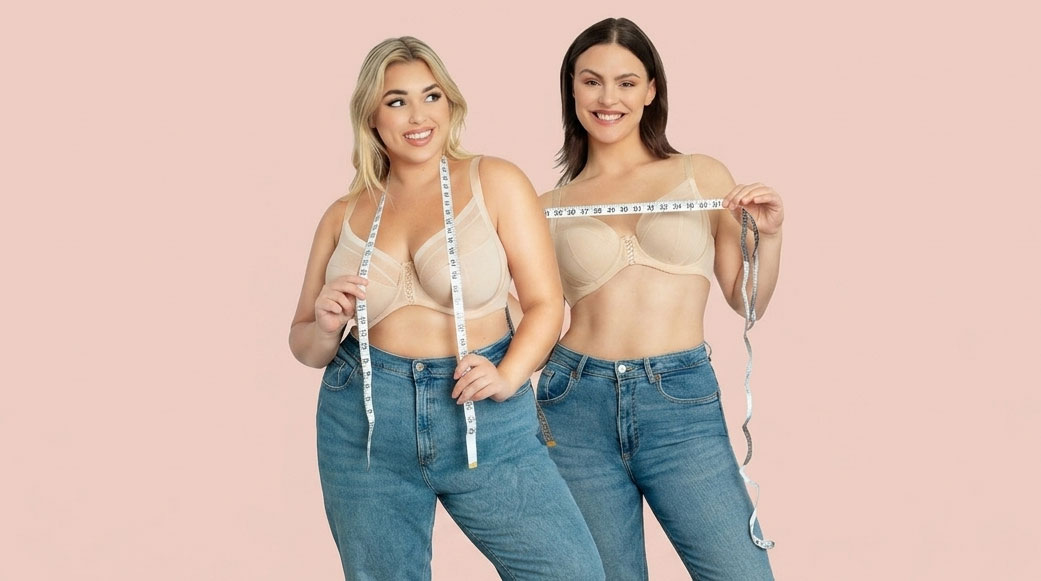
Finding the right bra is a journey of understanding your unique anatomy. At PARFAIT, we utilize standards to help you move past “just okay” and into a bra that feels custom-made for your body.
Here are the 4 most common fit challenges and the PARFAIT engineered solutions to solve them.
1. The Projected Profile & Narrow Roots
The Problem: You find that underwires are often too wide, sitting far back on your ribcage, while the cups remain empty at the bottom or collapse because they lack enough depth.
The Solution: You need “immediate projection” and narrow wires. Parfait designs specific balconettes and strapless options with deeper cups and shorter wire arcs to follow your natural root line.
- What to look for: Deep bottom-cup puckering/shaping, narrow underwire tracking, and multi-part seamed cups.
- Parfait Picks:
- Enora Floral Lace Bra: (a) 30D–44H; (b) Mid-height gore for stability; (c) 3-part seamed cup for maximum projection; (d) Centered straps to prevent slipping; (e) Best for narrow, projected shapes.
- Elissa Strapless: (a) 30D–40G; (b) High gore to prevent tipping; (c) Silicone-lined wide wings; (d) Comes with detachable straps; (e) Best for projected shapes needing a stay-put strapless.
2. Soft Tissue & The “Plunge Escape”
The Problem: If you have soft breast tissue, you might find yourself “spilling out” toward the center in plunge bras, even if the size is correct.
The Solution: You need a plunge that “tacks” (sits flat against the sternum) with enough side-to-center tension to keep tissue contained without sacrificing the low neckline.
- What to look for: Firm power-mesh wings, low but sturdy gores, and elasticized top-cup edges.
- Parfait Picks:
- Casey Plunge: (a) 28D–40G; (b) Narrow, low gore; (c) Molded foam cups with graduated padding; (d) J-hook for racerback conversion; (e) Best for soft tissue needing a lift and “held-in” feel.
3. Full-on-Top & Quadboob Prevention
The Problem: You experience the “double-boob” or “quadboob” effect where the top edge of the cup cuts into your tissue, despite the band feeling tight enough. The Solution: Look for “open” cup styles or stretch lace top panels that accommodate upper fullness rather than clamping down on it.
- What to look for: Stretch lace top sections, high apex cuts, and vertical seams.
- Parfait Picks:
- Adriana Bralette: (a) 30D–40G; (b) High center lace; (c) Unlined seamed lace with stretch; (d) Wide microfiber band; (e) Best for Full-on-Top (FoT) shapes.
- Mia Padded Wire-Free: (a) 30D–42H; (b) Tall center front; (c) Flexible foam; (d) Adjustable straps; (e) Best for those who need upper-cup forgiveness.
4. Side Support for “East-West” Tissue
The Problem: Your breast tissue naturally points outward toward your arms, causing a wide silhouette and potential underwire poking in the armpits.
The Solution: Side support panels (slings) are essential to “center” the tissue and provide a streamlined, front-facing silhouette.
- What to look for: Side slings, four-part cups, and reinforced side boning.
- Parfait Picks:
- Charlotte Side Support: (a) 28D–44K; (b) High, stable gore; (c) 4-part cup with explicit side-support panel; (d) Wide power-net wings; (e) Best for “East-West” or wide-set shapes.
How to Confirm Your Fit at Home
- The Scoop and Swoop: Lean forward and ensure all tissue is pulled from the sides into the cup.
- The Gore Check: Does the center wire touch your skin? If it floats, the cups are too small.
- The Band Test: You should be able to fit two fingers under the band comfortably. It should stay parallel to the floor, not ride up.
Frequently Asked Questions (FAQ)
Q: How do I know if I have narrow or wide roots? A: Narrow roots end before your armpit; wide roots extend toward or under your arm. Use the “push test” to see where your breast tissue begins on the side of your body.
Q: Why does my bra strap always fall down? A: This is usually a sign that the band is too large. When the band is too big, the straps sit too wide on the shoulders. Try dropping one band size and increasing one cup size (e.g., 34D to 32DD).


