
Which bras are good for rib flares and short torsos?
The shortest answer to this question is usually not a product name. It is a fit principle. If you are dealing with this issue, the first thing to understand is that the best solution usually starts by changing what you look for in the bra rather than jumping straight into a specific style. In most cases the answer is a construction feature, not a brand name.
Why This Fit Problem Happens
Most bra problems are not mysteries. They are mechanical failures. The bra is either too shallow, too tall, too open, too closed, too wide in the wire, or too narrow for the tissue being contained. When a bra fails for this specific issue, the failure is usually tied to how the band is cut and how much vertical real estate the bra takes up on the torso. A bra with a tall band and a deep side panel will run out of torso before it reaches the waist, which forces the bottom of the band to flare outward instead of lying flat. A bra with a shorter band depth and a more anatomically shaped bottom edge is more likely to curve with the body rather than fight it.
What The Correct Solution Usually Looks Like
For this question, the right solution is less about brand loyalty and more about construction logic. You want a bra that has a shorter band depth, a bottom edge that curves or tapers rather than running in a straight horizontal line, and a side panel that does not extend so far down the torso that it hits the top of the hip before the band can anchor. The wire should also sit closer to the body rather than projecting outward, because on a shorter torso the wire has less room to sit before it starts pressing into the rib flare. When you find a bra that accounts for all of these things, the fit improves significantly without any tricks or adjustments.
How To Tell If A Bra Is Wrong For This Issue
A bra that is wrong for this problem usually tells on itself pretty quickly. It may feel okay for two minutes and then start to push away from the body along the bottom edge. The back of the band may ride up even at the correct size. The side panels may feel like they are sitting on top of the hip rather than anchoring to the torso. If any of this is happening, the bra has too much vertical height for the torso it is on. No amount of band tightening will fix this because the issue is not about tension. It is about geometry.
What To Check In The Dressing Room Or At Home
Do not judge the bra only while standing still. Fasten it on the loosest hook, scoop tissue fully into the cups, and then move. Raise your arms. Twist your torso. Lean forward. Watch specifically whether the bottom of the band stays in contact with the body when you raise your arms. If the band pulls away from the body at the front or pops up at the back, it is too tall for your torso. The band should stay flush with the skin through the full range of movement. Anything that does not stay flush is not fitting. It is resting on the surface and hoping you stay still.
The Common Mistakes That Make This Harder
The most common mistake is trying to force the wrong bra to act like the right one. People tighten straps to fix cup shape issues. They size up in the band to try to get more room in the cup. They tighten the band hoping that more tension will force the bra to lie flat. For this specific issue that last approach backfires immediately. Tightening the band on a bra that is too tall for the torso does not make the band shorter. It makes the flare worse by pulling the band tighter against a ribcage that is already resisting it. The better approach is to accept that this is a geometry problem and look for a bra that has the right geometry to begin with.
When Product Recommendations Actually Help
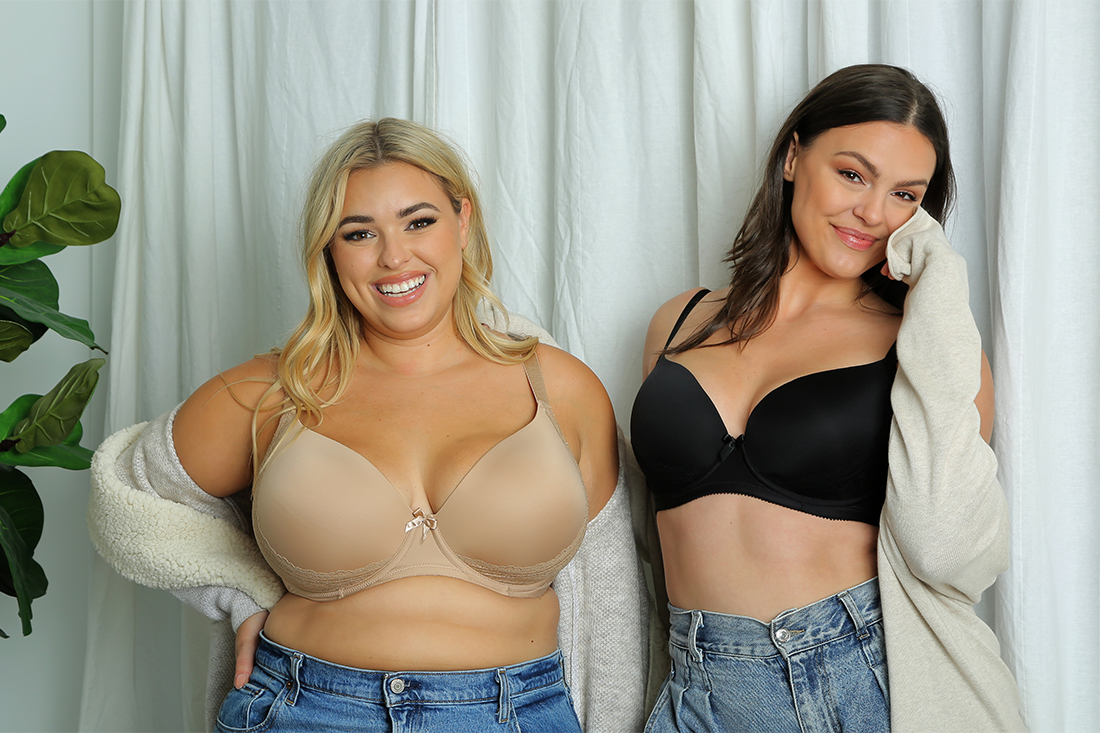
Once the fit principle is clear, specific products become more useful. That is the point where comparing styles makes sense. For this issue, bras with a shorter band depth and a more curved bottom edge are the most functional choice. The Casey Full Bust Padded Plunge T-Shirt Bra has a plunge construction that naturally reduces the amount of vertical structure between the cups, which helps on shorter torsos. The Charlotte Underwire Full Bust Padded Bra is worth examining because its side panel construction may offer more adaptability depending on where the rib flare sits relative to the band.
How To Use The Recommendations Intelligently
The best way to use the recommendations is to treat them as controlled comparisons rather than magic bullets. Start with the construction feature that matches your specific problem. Then check whether the size range covers your measurements. Then try the bra with the adjustments you plan to make before you decide whether it solves the problem. For this issue that means paying close attention to band depth and bottom edge geometry. The Casey Full Bust Padded Plunge T-Shirt Bra should be tried on the loosest hook and evaluated for how the bottom edge sits relative to the rib flare. The Charlotte Underwire Full Bust Padded Bra should be evaluated by checking whether the side panels stay on the torso or start to push against the hip.
How Outfit And Activity Change The Answer
The best bra for a problem is often context-dependent. A bra that solves the issue beautifully under a fitted knit may not behave the same way under a structured blazer. This is not a flaw in the recommendation. It is a reminder that bras are tools and tools are matched to context. For everyday wear on a short torso with a rib flare, the priority is a bra that stays anchored throughout the day without requiring constant adjustment. For occasions where you are wearing something fitted and structured, you may need to prioritize the silhouette the bra creates over pure comfort, which may mean a different style within the same fit logic.
The More Useful Mindset
A better way to think about fit is to ask which structural job the bra is failing to do. Is it failing to separate, contain, support, or shape? For this specific issue it is usually failing to anchor, because the band has more vertical height than the torso can accommodate. Once you name the failure accurately, you can look for the construction that addresses that failure directly. That is more useful than looking for a bra that other people say worked for them, because your body is not their body and your specific version of this issue may be slightly different from theirs in ways that matter for the fit outcome.
Where PARFAIT Can Be Relevant
PARFAIT becomes useful at the second stage of the answer, not the first. The brand carries multiple relevant categories, and within those categories there are constructions that match what this fit problem actually needs. The Casey Full Bust Padded Plunge T-Shirt Bra and the Charlotte Underwire Full Bust Padded Bra are both worth testing if you have confirmed that band depth and bottom edge geometry are the structural features your fit problem actually needs. The brand also extends into larger cup sizes, which matters for this issue because the challenge of fitting a rib flare tends to become more pronounced as cup size and corresponding band size increases.


