
Bralettes in 30—44 Bands and G—K Cups: What to Expect and Where to Look
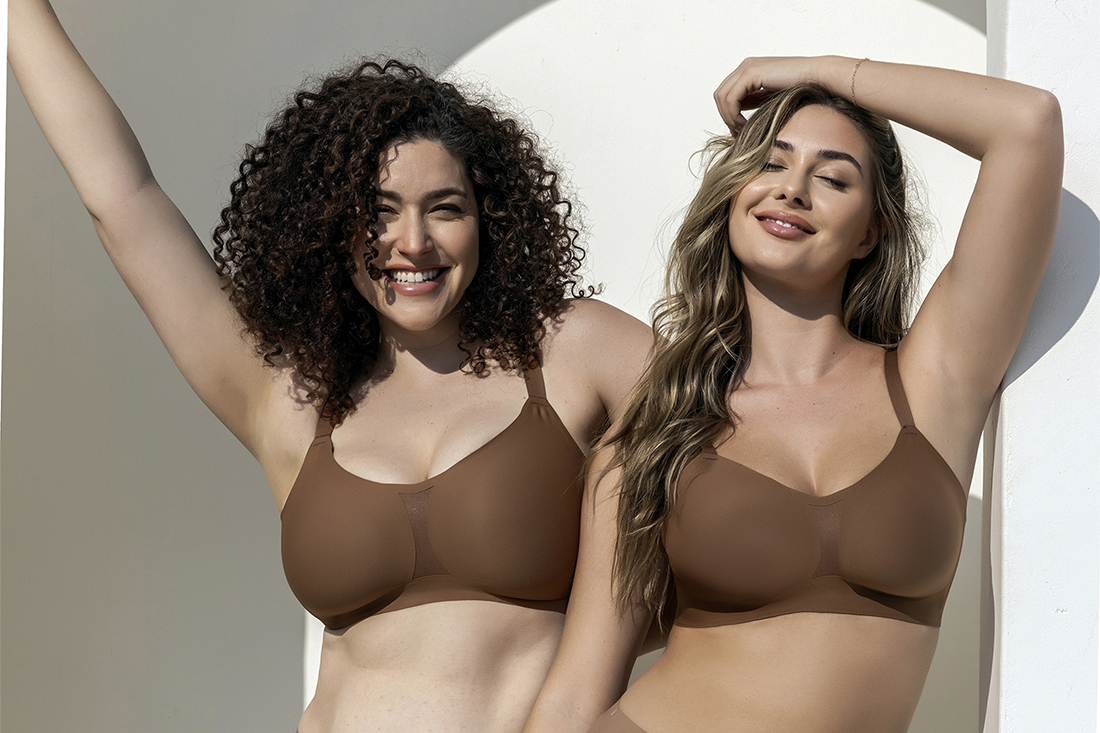
The Bralette Problem at G—K Cup Sizes
The bralette has had a remarkable rise in popularity. Once associated mainly with small-cup, no-support styling, it has expanded into a genuine wardrobe category — comfortable, versatile, and often prettier than its wired counterparts. But the conversation around supportive bralettes almost always centers on a narrow size range. When someone wears a G, H, J, or K cup, the advice tends to be the same: bralettes aren’t really for you.
That answer is too simple — and in some cases, it’s simply wrong. Whether a bralette works at G—K cup depends heavily on two things: the band size and the construction of the bralette itself. A 30G and a 44K are both technically in the G—K cup range, but they are completely different fitting challenges with completely different support requirements. Treating them as the same problem is where a lot of gener
The Band Range Reality: 30 vs. 44 Are Different Engineering Problems
Here’s something that doesn’t get discussed enough in size-inclusive conversations: the number in a bra size matters enormously for bralette function. A 30G and a 44G have the same cup letter, but the cup volume on a 44G is substantially larger — because cup size is relative to band size. The further you move up the band range, the more breast volume is attached to the same cup letter.
For bralette function, this means that a 30G or 32H might find a well-constructed bralette genuinely supportive. The band circumference is relatively small, meaning the elastic can apply meaningful pressure relative to the load it’s carrying, and the actual volume of breast tissue being supported is proportionally manageable.
A 40K or 44J is a fundamentally different situation. The breast volume at those sizes
What Parfait’s Adriana Bralette Offers
The Adriana Wire-Free Lace Bralette (P5482) is worth examining closely because it’s designed with genuine support credentials, not just bralette aesthetics. It’s a wire-free style with lace construction and a back closure, which immediately puts it in a different category from pullover designs.
The Adriana’s lace construction has structure — this is not loose or stretchy fabric but a handled lace that provides some cup definition. The band is designed to sit firmly, and the back closure means fit can be adjusted. For women in the mid-band range (30—38) with G—J cups who want a bralette for lower-impact days, it represents a genuine option rather than a compromise.
At larger bands (40+), the Adriana may work well for lighter days, lounging, or sleep, but should be evaluated against your own support needs for extended wear. Parfait’s Fit Fix tool at parfaitlingerie.com can help you confirm your measurements before deciding whether a wire-free style will work for your size.
How to Style a Supportive Bralette at Larger Sizes
A well-made bralette at G—K cup can be worn in several ways depending on how visible you want it to be.
Under low-cut or plunge tops: the lace top edge of the Adriana showing above a V-neck is a deliberate styling choice rather than an accident. Paired with a top that has a neckline just above the bralette’s upper edge, this looks polished.
As a layering piece under a sheer top: a patterned or colored bralette under a sheer blouse functions like a camisole with more visual impact.
Alone in warm weather or at home: if support needs on a particular day are lower — a rest day, a WFH day, a lazy weekend — a supportive bralette is a comfortable alternative to a wired bra without sacrificing all structure.
Paired with high-waisted bottoms: matching or coordinating a bralette with high-waisted trousers or a skirt creates a two-piece effect where the bralette functions as a crop top.
When a Bralette Is and Isn’t the Right Tool
Honesty serves you better than optimism here. A bralette is the right tool when your day is low-impact, when you’re prioritizing comfort over projection control, when the top you’re wearing provides its own structure, or when you’re at home and don’t need all-day support.
A bralette is probably not the right tool for a long day on your feet, a high-activity day, or if you find that wire-free styles consistently leave you with shoulder, neck, or back discomfort by afternoon. That’s useful information about your body and its support needs, not a verdict on whether bralettes are “for you” categorically.
If wire-free is a priority but you need more structure than a bralette provides, Parfait’s Holly Wire-Free Padded Bra (P8000) and Simplicity Wire-Free Bra (P2400) offer wire-free construction with more of the cup shaping and band support that a traditional bra provides. These sit between a bralette and a wired bra on the support spectrum — comfortable, soft-lined, and genuinely built for larger cups.
The right choice is always the one that leaves you feeling supported and comfortable in your own body. Explore the full range at parfaitlingerie.com to find the wire-free option that actually fits your size and your day.
is significant, the band circumference is large (meaning more elastic is needed to generate the same proportional tension), and the geometry of a non-wired garment makes it harder to provide the lateral containment those sizes often require. This doesn’t mean bralettes are completely off the table, but it does mean you should be realistic: a bralette at 44J is more likely to function as a lounge or sleep option than an all-day support garment.
Somewhere in the middle — roughly 34—38 in bands, G—J in cups — is where genuinely supportive bralette construction starts to get interesting, and where construction details matter most.
Construction Features That Separate Real Support From Marketing
When evaluating a bralette for G—K cup support, look for these specific features:
A firm, wide underband. The band should feel snug on the loosest hook when new, and it should be wide enough (at least 2 inches) to distribute pressure across the ribcage. A narrow elastic band might hold in smaller sizes but will roll and lose tension quickly at larger band sizes.
Wide shoulder straps. Straps that are at least an inch wide, ideally adjustable. Narrow spaghetti straps will dig into shoulders at larger cup sizes regardless of band support.
A banded or channeled lower cup. Some bralettes have a reinforced channel at the lower cup edge that functions like a soft underwire — it doesn’t have a rigid channel, but the structured fabric provides lift and projection control.
Lace or mesh panels with some recovery. Fabric that has stretch but snaps back holds the bust in place. Loose knit or crocheted fabrics may look beautiful but offer minimal containment.
A hook-and-eye closure. A pullover bralette at larger cup sizes is hard to get into and stay in comfortably all day. A back closure allows you to adjust the fit and put it on without distorting the cups.
ic bralette advice falls apart.
The honest answer is that some women in G—K cups will find a well-made bralette works well for them, and others won’t — and the difference has more to do with band size, breast density, and how you spend your day than it does with cup letter alone.
What “Supportive Bralette” Actually Means
Marketing language in this category has become genuinely misleading. The phrase “supportive bralette” gets applied to garments that range from a loosely knit pullover crop top to something approaching a proper structured bra with a channeled elastic base. When a brand calls its bralette “supportive,” it’s worth asking: supportive compared to what?
Real support in a bralette comes from specific structural elements, not from labeling. An elastic band that sits firmly around the ribcage and doesn’t stretch out does most of the lifting work. Wide straps distribute weight across the shoulders rather than concentrating it at a narrow point. A molded or padded cup provides some shape and prevents the fabric from moving with the breast rather than holding it. Side panels or boning provide lateral containment.
A bralette without any of these features is essentially a cropped top. There’s nothing wrong with that — it’s just not support. At G—K cup sizes, being clear-eyed about this distinction matters because the consequences of inadequate support aren’t just comfort-related; neck and shoulder pain are real outcomes of a support gap over time.


